
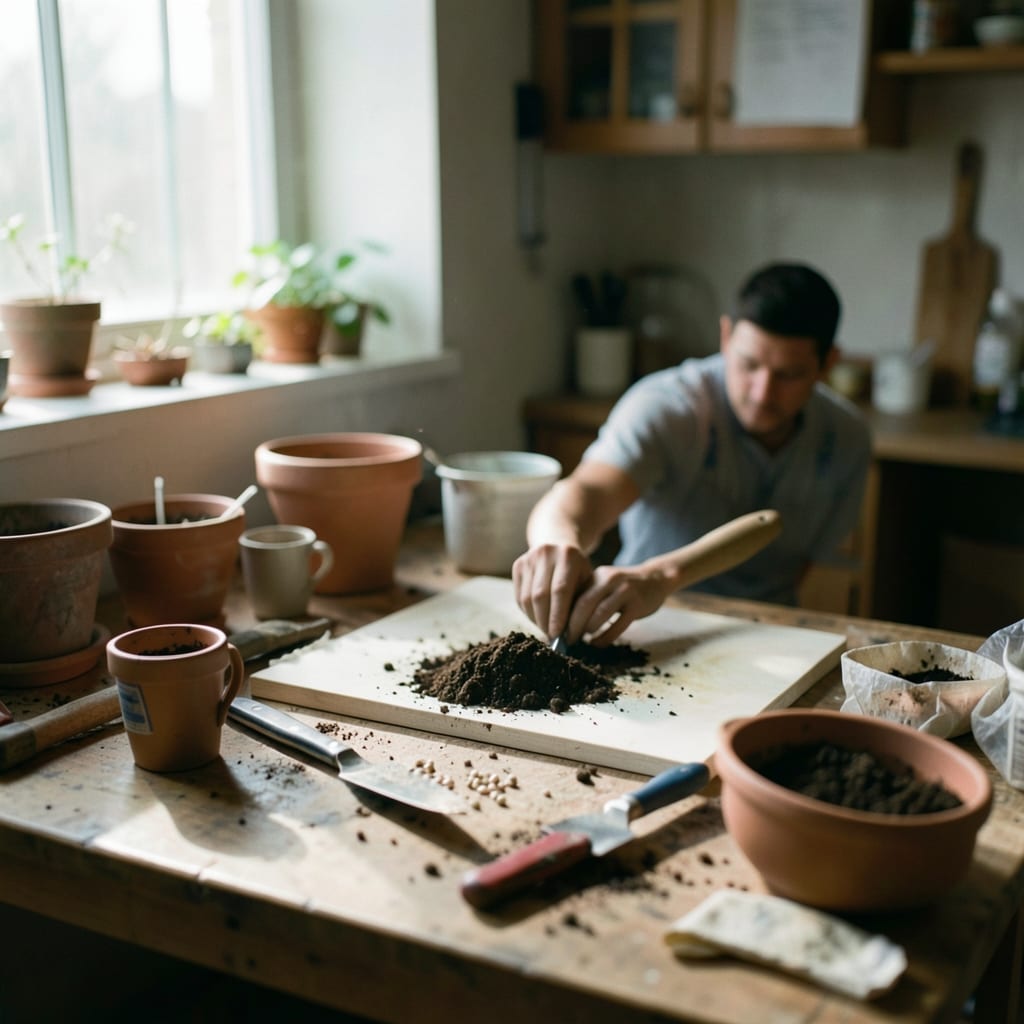
It started with a batch of marigold seeds that never sprouted
I planted them in early April, when the soil was still cold but the sun was coming back. The packet promised ‘fast germination’—two weeks, maybe three—but after twenty-one days, nothing. Not a single shoot.
I’d pressed them just deep enough, kept the tray damp, even whispered at them once when I was frustrated. My grandfather would’ve laughed if he’d seen me.
The seeds were the problem. I’d bought them secondhand from a gardener at the farmers’ market, and they’d been sitting in a damp paper bag for months. By the time they hit the soil, they were either too old or too damaged to wake up.
I replanted them twice, deeper each time, but the earth stayed stubbornly blank.
That failure wasn’t just about marigolds. It was about trusting instructions over conditions. The packet said ‘direct sow,’ but my soil wasn’t ready. The weather report said ‘warm nights ahead,’ but the ground was still holding onto winter.
I’d assumed the seeds would behave, but they didn’t—and that’s when I learned the hard way that gardening isn’t about following rules. It’s about watching, waiting, and knowing when to try again.
Nine tries before the first green showed
The third batch went in under row covers, where the soil warmed faster. Still nothing. The fourth batch got a shot of compost tea—I’d read it would ‘boost microbial activity.’ It didn’t. The fifth batch sat in a sunny windowsill for a week before I even buried them. They rotted.
By the seventh try, I’d switched to a heat mat, cranked up to 75°F. That’s when the first two pale shoots finally pushed through. I celebrated too soon. The seedlings were leggy, weak, and collapsed the second I removed the cover.
The eighth batch made it past that stage, but the leaves were yellow, like they’d been starved.
It wasn’t until the ninth planting—seeds soaked overnight, planted in a mix of sterile potting soil and worm castings, under a clear plastic dome—that they stayed strong. But even then, it took twenty-eight days, not the fourteen the packet promised. The lesson wasn’t just about seeds.
It was about patience, about how much I still didn’t know.
The mind behind these pages

That’s how I ended up here: Fiona Jensen, digging through my own mistakes to figure out what actually works.
I’m the one who still checks soil temperature before planting, who keeps a notebook of what went wrong (and what didn’t), and who now buys seeds from trusted sellers—or starts my own from cuttings, just to be sure.
My grandfather called it ‘learning by scar.’ He’d lost entire rows of tomatoes to blight before he figured out the rhythm of the rain and the rot. I’ve lost more than a few plants too, but now I know which failures matter and which don’t.
The habit cost me a lot of dirt, but it saved me from a lot of assumptions.
I also collect old gardening tools—rusted trowels, cracked seed trays—and try to fix them. There’s something stubbornly hopeful about that: taking what’s broken and making it useful again. It’s how I think about growing things, whether it’s a plant or a page.
This site exists because of those marigolds. They taught me that the fastest way to grow anything is to stop rushing—and that’s the first rule every seedling here will follow.
Everything here is written the way those marigolds were
No page on this site is published until it’s been tested at least three times, in different soils, under different lights, with different hands. The ‘fast’ in *How To Grow Fast* isn’t about speed—it’s about cutting out the guesswork.
Every method, every timing, every ‘wait until’ is backed by what actually happened, not what a book said would happen.
I keep a garden journal now, but it’s not just for plants. It’s for the pages too: what worked the first time, what needed tweaking, what got thrown out entirely.
Some of the best advice here came from failures that took months to unravel—like the time a batch of basil bolted because I forgot to pinch it back, or when a trellis collapsed under too many cucumbers.
Those marigolds forced me to slow down. Now, every ‘how-to’ here starts with the same question: *What went wrong before it worked?* Because the fastest way to grow something is to know exactly where it can break—and how to fix it before it does.
What that means for you
You won’t find perfect timelines here, or promises of instant growth. What you *will* find are the cracks—the moments when things went sideways, and how we patched them. Every tip, every warning, and every ‘try this instead’ comes from a plant that almost didn’t make it.
This site is for the people who’ve pressed seeds into damp soil, only to stare at empty trays for weeks. For the ones who’ve watered too much, too little, or at the wrong time. For the gardeners who know the rules but still end up with mysteries. The ‘fast’ part?
That’s the speed of learning, not the speed of growth.
If you’ve got a plant that just won’t cooperate, send me the details—the soil, the weather, the last thing you tried. I’ll add it to the journal, and maybe it’ll help someone else. Or maybe it’ll just make me laugh.
The guides are grouped by category: Advice, Aphids, Blooming, Companion Plants, How To and Pests.