
Propagation
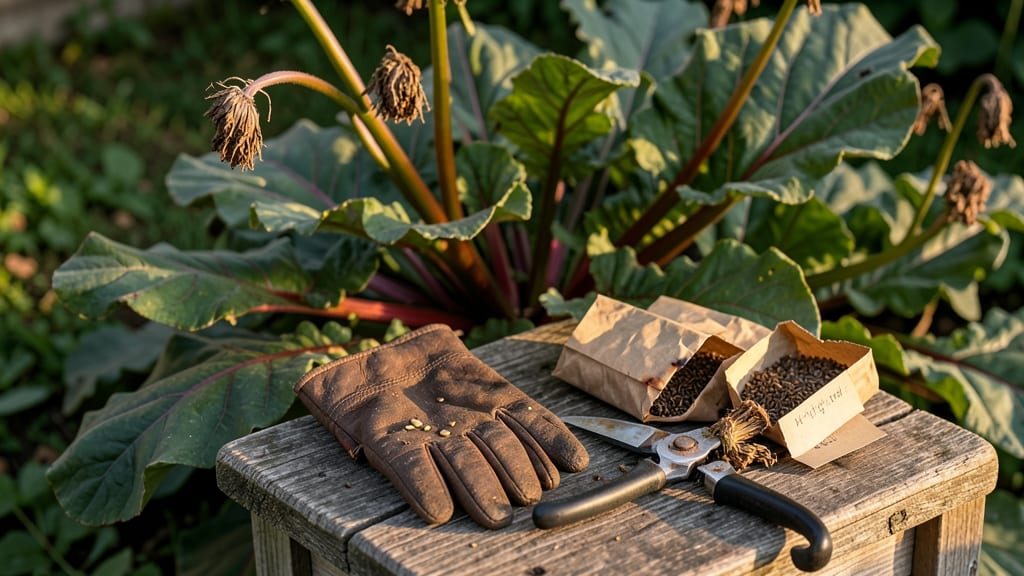
Collecting rhubarb seeds rewards patience with next year’s harvest. 🌱 The process starts with understanding that rhubarb rarely produces viable seeds from its first year—it’s a two-year project at minimum, and often longer.
What most gardeners don’t realize is that the seeds need proper pollination, which means planting multiple varieties nearby or hand-pollinating with a soft brush. The real work begins after the flowers fade.
You’ll need to identify the seed pods (small, round, and green) that form in late summer, then wait until they turn brown and papery before harvesting.
Cut them carefully, split them open to release the tiny black seeds, and let them dry on paper towels for 1-2 weeks—this prevents mold and ensures better germination rates. Once dry, store the seeds in an airtight container in the fridge until spring.
Viability drops sharply after a year, so plant them as soon as possible. Even then, success isn’t guaranteed—rhubarb seeds often take 3-5 years to produce edible stalks, and some varieties never reliably set seed at all. For most gardeners, division is the faster, surer route.
But if you’re curious about growing unique heirloom varieties, seed-collecting is the way to go—just manage expectations. Here’s how to maximize your chances of success.
📚 In This Guide
- What you need
- Instructions
- Tips and common mistakes
- Wrapping up and next steps
What you need
- ● Mature rhubarb plant: A healthy, established plant (at least 2–3 years old) with seed stalks (if growing from seed) or purchased seeds from a trusted supplier.
- ● Seed stalks or ripe seed pods: Collect these after the plant flowers (late spring to early summer). Look for plump, brownish pods that split open naturally.
- ● Scissors or pruning shears: Sharp and clean to avoid damaging the plant or seeds.
- ● Paper towels or seed-starting trays: For drying and storing seeds (or small pots for direct sowing).
- ● Air-tight container (e.g., envelope or jar): To store seeds in a cool, dry place.
- ● Labeling tags or masking tape: To mark seed containers with the variety and date.
- ● Fine-mesh sieve: Helps separate seeds from chaff if drying pods.
- ○ Desiccant packets: Optional for long-term seed storage to prevent moisture.
- ● Gloves: Protects hands from sap (though rhubarb isn’t toxic, it can irritate sensitive skin).
- ● Notebook: To log seed varieties, collection dates, and germination notes.
- ● Grow lights or sunny windowsill: For indoor seed starting (if not sowing directly outdoors).
Step-by-Step instructions for collecting rhubarb seeds
Rhubarb seeds are finicky but rewarding—here's how to turn this year's harvest into next season's plants.
🌱 Step 1: Identify and Select Mature Seed Stems
Wait until late summer when seed stalks appear—these look like tall, spindly stems with clusters of tiny flowers at the top. Choose the healthiest, most vigorous stalks from your oldest, most productive rhubarb plant. These will produce the strongest seeds for next year.
Harvest the entire stalk when about 50% of the flowers have turned brown and dried. Cut it at the base with clean pruners, leaving the crown undisturbed. The seed heads need to fully mature on the stalk, so don't rush this step—patience here means better germination later.
🌿 Step 2: Dry and Process the Seed Heads
Hang the harvested stalks upside down in a dry, well-ventilated area with good airflow (like a garage or covered porch). This prevents mold while allowing the seed pods to dry completely. It typically takes 2-3 weeks for the seed heads to fully desiccate—you'll know they're ready when the pods turn papery and easily crumble when touched.
Once dry, gently rub the seed heads between your fingers or use a paper bag to shake out the tiny seeds. Rhubarb seeds are extremely small—think poppy seeds—and will float away easily, so work over a large piece of newspaper or cardboard. You'll get 4-6 seed packets' worth from one mature stalk.
💧 Step 3: Store Seeds Properly for Germination
Transfer the seeds to a paper envelope or breathable container—plastic bags trap moisture and cause rot. Label it with the variety name and harvest date. Store in a cool, dark place (like your refrigerator's crisper drawer) where temperatures stay between 35-45°F.
Rhubarb seeds require stratification—a cold period—to break dormancy. They'll stay viable for 1-2 years if stored properly, but germination improves dramatically after 3-4 months of cold treatment. Check seeds in early spring before sowing to ensure they haven't dried out completely.
☀️ Step 4: Sow Seeds Indoors for Early Growth
Start seeds 8-10 weeks before your last frost date in well-draining seed-starting mix. Plant them ¼ inch deep—they're so tiny that covering them too deeply delays germination. Use a fine mist to moisten the soil without disturbing the seeds, then cover the tray with plastic wrap to retain humidity.
Keep the soil consistently moist (not soggy) and maintain temperatures around 65-70°F for germination. Seeds typically sprout in 2-4 weeks, but some may take longer. Once seedlings emerge, remove the plastic wrap immediately to prevent damping-off. Thin to 1 inch apart when they develop their first true leaves.
⏰ Step 5: Harden Off and Transplant Young Plants
After 4-6 weeks of indoor growth, when seedlings have 3-4 true leaves, begin hardening them off. Move them outdoors for 2-3 hours daily in a shaded spot, gradually increasing exposure over 10-14 days. This prepares them for outdoor conditions and prevents transplant shock.
Plant outdoors after the last frost in full sun to partial shade, spacing them 18-24 inches apart. Rhubarb seedlings grow slowly—don't expect harvests for 2-3 years. Mulch heavily around plants to protect roots during their first winter, as they're still establishing strong crowns.
Tips & tricks for perfect rhubarb seed collection
These patient gardener secrets will help you maximize your seed yield and ensure strong germination for next season's rhubarb plants.
Timing is Everything: In Step 1, don't harvest those seed stalks too early—wait until exactly 50% of the flowers have turned brown and dried. This ensures the seeds inside are fully mature and ready for collection. I've learned this the hard way after trying to rush the process and ending up with seeds that wouldn't germinate. The extra week or two of waiting pays off with much higher viability.
Drying Strategy: For Step 2, if you're worried about mold during the 2-3 week drying period, consider using a small fan on low setting near your drying area. This creates better airflow without disturbing the stalks. I also recommend checking your drying location's humidity—aim for below 50% for best results. The papery texture is your golden cue that seeds are ready to process.
Storage Wisdom: When storing your seeds in Step 3, I've found that adding a small silica gel packet to your paper envelope helps absorb any residual moisture. This extends their viability beyond the 1-2 year window. Also, write the harvest date prominently on your label—this helps you track how long seeds have been stored, which is crucial for planning your stratification period.
Germination Boost: For Step 4, if you're struggling with slow germination after your 3-4 months of cold treatment, try soaking the seeds in warm water for 12 hours before planting. This mimics natural spring rains and can significantly improve sprout rates. Just be gentle when handling those tiny seeds—they're about as delicate as poppy seeds!
Pro Tips for Collect Rhubarb Seeds
- These patient gardener secrets will help you maximize your seed yield and ensure strong germination for next season's rhubarb plants.
- Timing is Everything: In Step 1, don't harvest those seed stalks too early—wait until exactly 50% of the flowers have turned brown and dried.
- Drying Strategy: For Step 2, if you're worried about mold during the 2-3 week drying period, consider using a small fan on low setting near your drying area.
Frequently asked questions
about collecting rhubarb seeds—because growing your own from seed is a journey, not a sprint! Here are answers to the most common queries to help you navigate the process with confidence.How long does it take for rhubarb seeds to germinate?
Patience is key! Rhubarb seeds can take anywhere from 2 to 6 weeks (or even longer) to germinate, depending on temperature and moisture. Keep the soil consistently moist and maintain a steady 60–70°F (15–21°C) environment. Cold stratification (chilling seeds for 4–6 weeks) can speed up germination—just mimic winter’s touch!
Can I collect seeds from store-bought rhubarb?
Unfortunately, no—store-bought rhubarb is almost always sterile (no seeds) because it’s grown for its stalks, not reproduction. For seeds, you’ll need to source them from a reputable seed supplier or grow rhubarb from seed yourself first. Think of it as a long-term investment for your garden’s future!
What’s the best way to store rhubarb seeds until planting?
Store seeds in a cool, dry place (like a sealed envelope in the fridge) for up to 2 years. For best results, label them with the collection date and variety. If you’re impatient, try stratifying them (mixing seeds with damp sand and refrigerating for 4–6 weeks) to boost germination rates—nature’s way of prepping for spring!
Why aren’t my rhubarb seeds sprouting? Troubleshooting tips.
If seeds aren’t germinating, check these common culprits:
- Temperature: Too cold (<60°F/15°C) or too hot (>80°F/27°C) can stall growth.
- Moisture: Overwatering causes rot; underwatering dries them out. Aim for evenly damp soil.
- Light: Seeds need indirect light—no direct sun until sprouts emerge.
- Freshness: Older seeds (over 2 years) may lose viability.
Are there easier ways to propagate rhubarb than seeds?
While seeds work, division (splitting mature plants) is the fastest and most reliable method. Dig up a healthy 2–3-year-old rhubarb plant in early spring or fall, separate the crown into smaller sections with 3–5 buds each, and replant. Boom—instant rhubarb with zero waiting! Seeds are for adventurers; division is for efficiency.
Wrapping up and next steps
Collecting rhubarb seeds is a rewarding journey that connects you to next season’s vibrant harvest—and you’ve got all the know-how now! 🌱 From selecting mature seed stalks to nurturing your seedlings with care, every step brings you closer to a thriving garden. Don’t let patience hold you back—this is your chance to grow something truly special!
Ready to take the next step? Start small:
- Sow a few seeds in pots this fall to test your green thumb.
- Share your newfound skills with fellow gardeners—seed swaps make growing even more fun!