
How To
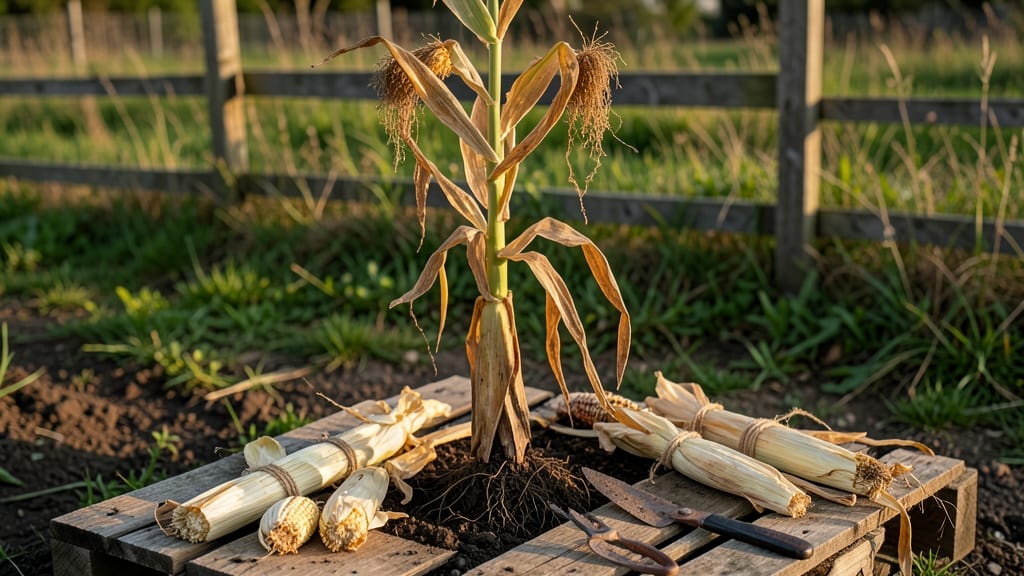
Harvest corn stalks when kernels are fully mature and dry, then bundle them in small groups and hang upside down in a well-ventilated, dry area for 2-4 weeks. Alternatively, lay them flat in single layers with spacing for airflow until completely dried and brittle.
Drying corn stalks properly preserves their structural integrity while preventing mold or rot. 🌾 The key is creating the right conditions—humidity between 30-50% and temperatures around 60-80°F work best. I always aim for 2-4 weeks of consistent airflow, whether hanging bundles or laying stalks flat.
This method ensures the stalks become crisp and brittle, ready for long-term storage without losing their natural shape or strength.
Once fully dried, store them in mesh or paper bags to maintain airflow and deter pests. 🔥 Check for complete dryness by snapping a stalk—if it breaks cleanly, it's ready. Proper drying prevents seed loss and keeps the stalks usable for crafts, decorations, or even composting later.
How to dry corn stalks: the science behind proper airflow and moisture control
The drying process transforms fresh corn stalks into lightweight, brittle structures by removing moisture through evaporation. Corn stalks contain about 70-85% water when freshly harvested, and reducing this to 10-15% moisture content is critical for long-term preservation.
The stalks' fibrous structure makes them particularly susceptible to mold if moisture lingers, so proper airflow is non-negotiable. 🌾 What makes this tricky is that corn stalks don't dry uniformly—thicker sections near the base take longer than the thinner upper stalks, which is why bundling or spacing them evenly becomes essential.
Temperature and humidity work together to create the ideal drying environment. Aim for 60-80°F temperatures with relative humidity between 30-50%—any higher humidity slows evaporation, while temperatures above 90°F can cause the stalks to dry too quickly on the outside while remaining damp inside, creating weak spots.
A well-ventilated barn, garage with fans, or even a covered porch with shade works perfectly. For reference, indoor air conditioning set to 70°F with a dehumidifier maintains these ideal conditions without requiring constant monitoring.
Two primary methods—hanging bundles and flat drying—each have distinct advantages. Hanging stalks upside down in small groups (3-5 stalks per bundle) maximizes airflow around all surfaces, while laying them flat in single layers with 6-12 inches of spacing between rows prevents moisture buildup.
The key is consistency: turning bundles every 2-3 days ensures even exposure to airflow. For large quantities, a drying rack with mesh sides elevates stalks off the ground while allowing circulation from all directions.
Visual cues help determine when stalks are fully dry. A properly dried stalk should snap cleanly when bent—if it bends without breaking, it still contains too much moisture.
Another test is the "paper test": rub a dried section between your fingers; if it feels gritty and leaves no residue, it's ready. 💫 Neglecting this step risks attracting pests like weevils or developing mold, which can ruin entire batches.
For maximum shelf life, store dried stalks in breathable containers like mesh bags or cardboard boxes with ventilation holes, keeping them in a cool, dark place away from direct sunlight.
Seasoned crafters often swear by adding a few dried bay leaves or cedar chips to storage containers as natural pest deterrents. These stalks can then be used for everything from rustic centerpieces to bird feeders or even as natural mulch in gardens.
The structural integrity of properly dried stalks remains intact for 1-2 years when stored correctly, making them a versatile resource for both practical and decorative projects.
One common mistake is rushing the process by using heat sources like ovens or heaters, which can cause stalks to become brittle too quickly on the outside while staying damp inside—a condition called "case hardening."
This creates weak points that break easily and may still harbor mold. Instead, rely on natural airflow and patience for stalks that remain strong and usable for their intended purpose. ✨
For those working with organic corn varieties, the drying process also helps preserve the natural oils in the stalks, which can enhance their aromatic qualities when used in decorative arrangements.
The subtle sweetness of properly dried corn stalks makes them particularly appealing for autumn-themed crafts, where their golden hues complement seasonal color palettes beautifully.