
Pests
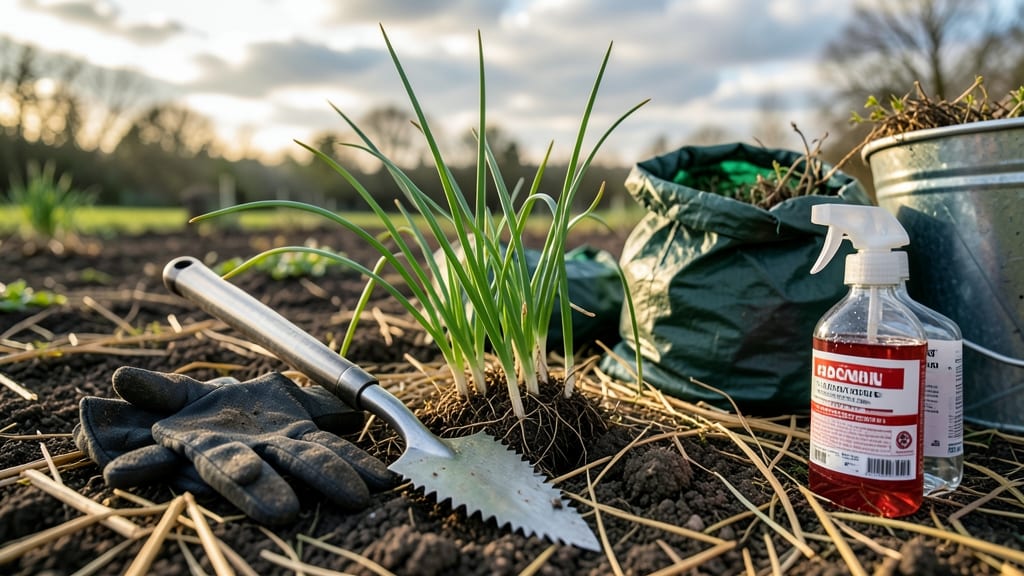
How to get rid of onion weed before it takes over your garden is all about timing and precision. That sharp, onion-like smell means it’s already spreading roots deeper than you think—often 12+ inches down. The boiling water method doesn’t just kill the tops; it sears the roots where they matter most, preventing regrowth for good.
You’ll need just three things: a large pot of boiling water, a watering can with a narrow spout, and a sunny day for best results. The technique works on wild onions, garlic mustard, and other invasive alliums that crowd out your vegetables.
No digging means no disturbing soil-borne diseases, and you avoid harsh chemicals that might linger in your edible garden.
After pouring boiling water directly over the weed’s base, you’ll see the leaves wilt within minutes—and the roots will die back within days. The soil stays usable for planting immediately, and the method works equally well in flower beds, vegetable patches, or along fences where these weeds take over.
For stubborn patches, repeat weekly until no new growth appears.
This approach is especially effective in spring when weeds are actively growing, but it works year-round in mild climates. The key is persistence: onion weeds store energy in their roots, so you must target them before they recover.
Once mastered, you’ll reclaim space that was once lost to these tenacious invaders.
📚 In This Guide
- What you need
- Instructions
- Tips and common mistakes
- Wrapping up and next steps
What you need
- ● Boiling water: At least 1–2 gallons per treatment session (adjust based on weed density). Use a large pot or kettle with a spout for precision.
- ● Heavy-duty gloves: 1 pair (waterproof, heat-resistant, like rubber or gardening gloves) to protect your hands from burns and blisters.
- ● Long-sleeved clothing: 1 set (lightweight, moisture-wicking fabric) to shield arms from splashes.
- ● Garden trowel or hand fork: 1 unit (5–7 inches long) for loosening soil and exposing hidden roots.
- ● Garden hose or water source: For rinsing tools and cooling treated areas afterward.
- ● Trash bags or compost bin: To dispose of uprooted weeds and debris.
- ○ White vinegar (optional but helpful): 1 cup mixed with boiling water (1:1 ratio) for extra weed-killing potency.
- ● Boiling water dispenser: A pitcher or insulated container with a spout for easier pouring (great for large areas).
- ● Mulch (straw, wood chips, or cardboard): To smother regrowth and prevent new weeds from sprouting.
- ● Soil solarizer (clear plastic sheet): 1–2 sheets (4–6 mil thickness) to cover treated areas for 2–4 weeks and kill remaining roots with sunlight.
- ● Onion weed identification guide: A phone app or printed chart to confirm you’re targeting the right weed (avoid mistaking it for edible onions!).
Step-by-step instructions for eliminating onion weed permanently
This boiling water method works fast and kills onion weed at the root—no toxic chemicals needed.
Identify and Prepare the Onion Weed
Onion weed (also called wild onion or garlic) has long, grass-like leaves with a distinctive onion or garlic scent when crushed. Pull up a few plants to confirm you're dealing with onion weed—its roots grow deep and fibrous, unlike grass. Work on a dry, sunny day when the soil is slightly moist but not soggy.
Clear the area of debris and trim any nearby grass or plants within 6 inches of the weed. This prevents accidental damage to desirable vegetation when applying boiling water. I like to mark the weed's location with a small stick or rock so I don't miss any spots during treatment.
Boil Water and Apply Directly to the Roots
Fill a large pot or kettle with 4-6 quarts of water and bring it to a full rolling boil. The water must be scalding to penetrate the weed's deep root system. Pour the boiling water slowly and evenly over the base of the onion weed, focusing on the soil where the roots grow.
Use about 1 quart of boiling water per weed. The steam and heat will kill the plant within minutes, but the roots need time to fully decompose. Repeat this process every 3-4 days for 2 weeks to ensure complete eradication. Avoid nearby plants by keeping the pot steady and pouring carefully.
Monitor and Retreat as Needed
After the first treatment, watch for new growth. Onion weed is stubborn, and you may see regrowth within 5-7 days. If new shoots appear, repeat the boiling water method immediately. The key is persistence—this weed won’t give up without consistent heat treatment.
Once the area is clear for 4 weeks, you can replant or reseed. The heat from the boiling water sterilizes the soil slightly, reducing the chance of regrowth. I like to cover the treated area with 2-3 inches of mulch afterward to suppress any remaining weed seeds.
Prevent Future Onion Weed Growth
Onion weed thrives in disturbed soil, so avoid tilling the area frequently. Instead, maintain a thick layer of mulch to block sunlight and prevent weed seeds from germinating. If you notice new onion weed sprouts, pull them immediately before they establish deep roots.
Consider planting competitive ground covers or dense vegetation in the treated area. Plants like clover or creeping thyme outcompete onion weed naturally. For lawns, overseeding with a dense grass variety helps fill gaps where weeds might take hold.
Tips & tricks for eliminating onion weed effectively
This method works best when you're strategic about timing and technique—here's how to make it foolproof.
Timing Tip: The 3-4 day interval between treatments is crucial because it gives the roots time to absorb the heat and begin decomposing. I've found that treating in the late afternoon works best—this allows the soil to stay warm overnight, maximizing the heat's effectiveness on the roots. Avoid treating on windy days, as the breeze can cool the boiling water too quickly before it reaches the roots.
Precision Application: When pouring the boiling water, aim for the base of the weed where the roots meet the soil. A steady hand prevents spills onto nearby plants. I like to use a watering can with a narrow spout for better control, especially in tight spaces. The key is to saturate the soil thoroughly—don't just splash the leaves.
Monitoring Strategy: After the first treatment, mark the treated areas with small flags or rocks so you don't miss any spots during follow-up sessions. Onion weed often sends out new shoots from the same root system, so thorough monitoring is essential. I check my treated areas every 3-4 days, looking for any new growth that needs immediate attention.
Prevention Plan: Once you've eradicated the onion weed, maintain a thick layer of mulch (2-3 inches) to block sunlight and prevent new seeds from germinating. I've had great success using straw or wood chips, which also help retain soil moisture. For lawn areas, overseeding with a dense grass variety creates a competitive environment that naturally suppresses weed growth.
Pro Tips for Get Rid Of Onion Weed
- This method works best when you're strategic about timing and technique—here's how to make it foolproof.
- Timing Tip: The 3-4 day interval between treatments is crucial because it gives the roots time to absorb the heat and begin decomposing.
- Precision Application: When pouring the boiling water, aim for the base of the weed where the roots meet the soil.
Frequently asked questions
Got questions about tackling onion weed? You’re not alone! Here are some of the most common concerns—and straightforward answers—to help you reclaim your garden with confidence.
Is onion weed really that hard to kill?
Yes, but not if you use the right method! Onion weed (or wild onion) has deep, persistent roots, which is why boiling water is so effective—it kills the roots and prevents regrowth. Manual pulling often fails because you miss hidden rhizomes. Stick with the boiling water technique for long-term results.
How long does it take to see results?
You’ll notice wilting within 24–48 hours, but full eradication takes patience. Reapply boiling water to any regrowth for 2–3 weeks to ensure the roots are completely dead. Consistency is key—don’t skip treatments!
Can I use vinegar or salt instead of boiling water?
Vinegar (especially undiluted) can work, but it’s less effective on deep roots and may harm nearby plants. Salt is even riskier—it can sterilize soil and harm your garden’s health long-term. Boiling water is the safest, most reliable method for onion weed.
Will boiling water hurt my other plants?
If applied carefully, no! Just avoid spraying boiling water near delicate plants. For safety, pre-wet the soil around desired plants with cool water first to create a barrier. Always aim the water directly at the onion weed’s base.
What if the weed keeps coming back?
Persistent regrowth usually means you missed some roots. Dig deeper (up to 6 inches) to check for remaining rhizomes, then reapply boiling water. For stubborn patches, consider a vinegar-and-soap mix (3:1 ratio) as a secondary treatment.
Wrapping up and next steps
Say goodbye to stubborn onion weed for good! By using the boiling water technique, you’re not just dealing with the tops—you’re tackling the roots too, ensuring those pesky plants don’t bounce back.
Whether you’re a gardening pro or just starting out, this method is simple, effective, and chemical-free—perfect for keeping your garden thriving without the hassle.
Ready to reclaim your space? Grab your kettle, follow the steps, and watch that onion weed vanish in no time. Your garden will thank you! 🌱✨