
Propagation
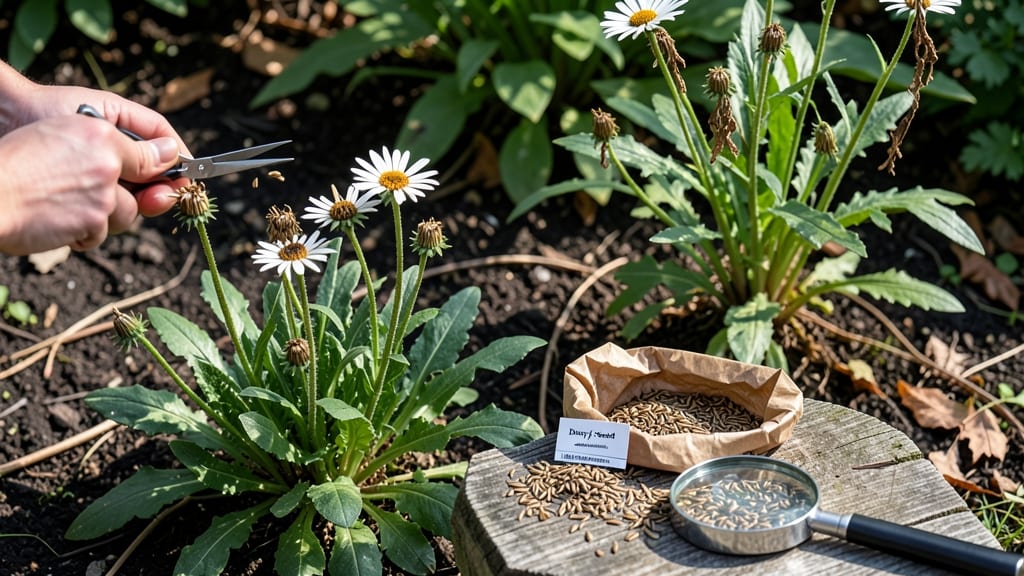
Getting seeds from daisies is simpler than you think—your garden’s future blooms are already hiding in plain sight. ✨ The key is patience and timing: wait until the flower heads turn brown and papery, then gently harvest them before they scatter.
This method ensures you’ll have fresh daisies growing next season without buying new plants.
You’ll only need a few basic supplies: a pair of clean scissors or pruners, a paper bag or envelope for drying, and a dry, dark spot to store them.
The process takes about 2 weeks from harvest to storage, and it’s perfect for beginners who want to save money and keep their favorite varieties.
Once dried, the seeds will pop right out of the flower head—no fuss, no mess. Store them in an airtight container in a cool, dark place, and they’ll stay viable for 2-3 years. Imagine walking through your garden next year and seeing those same cheerful faces blooming again.
This method works for all daisy types, from classic white oxeye daisies to colorful gerbera varieties. Just avoid harvesting from hybrid plants if you want true-to-type flowers. Ready to turn this year’s blooms into next year’s garden staples?
📚 In This Guide
- What you need
- Instructions
- Tips and common mistakes
- Wrapping up and next steps
What you need
- ● Mature daisy flowers – Choose fully bloomed, browned, or dried daisies (like Bellis perennis or Gerbera) with seed heads ready for harvest.
- ● Sharp scissors or pruning shears – For cleanly cutting seed heads without damaging stems.
- ● Paper bags or breathable containers – At least 2-3 medium-sized bags (8x10 inches) to collect seeds and allow airflow.
- ● Drying tray or screen – A flat surface (like a wire rack or baking sheet) to spread seeds for drying.
- ● Small envelopes or seed packets – 3-5 labeled envelopes (with the daisy type and date) for storage.
- ● Pencil or marker – For labeling your seeds.
- ○ Gloves (optional but recommended) – To protect hands from prickly seed heads.
- ● Seed separator or sieve – To gently remove seeds from chaff (especially for larger daisy varieties).
- ● Desiccant packets – A few silica gel packets to keep seeds dry if storing long-term.
- ● Magnifying glass – For inspecting seeds for viability or pests.
- ● Spray bottle with water – To lightly mist seeds if humidity is low during drying.
Step-by-step instructions for collecting daisy seeds
Here’s the simple, hands-off way I’ve used for years to save daisy seeds—no special tools, just patience and timing.
🌱 Step 1: Wait for Seed Heads to Mature Fully
Daisies produce seeds in those fluffy white puffballs, but they won’t be ready until the center turns brown and dry. I wait until late summer or early fall when the petals have fallen away completely—this usually takes 6-8 weeks after the first bloom opens. You’ll know they’re ready when you can gently crush the dried center between your fingers and see tiny black seeds inside.
Don’t rush this step. Green or partially dry centers mean seeds won’t store well and may not germinate next year. If rain is in the forecast, cover the seed heads with a small paper bag secured with a rubber band to keep them dry.
🌿 Step 2: Harvest the Seed Heads at the Right Time
On a dry day, cut the entire seed head with 4-6 inches of stem attached using clean pruning shears. Hold a large sheet of newspaper or a brown paper bag beneath the stem as you cut—this catches any seeds that might fall prematurely. I like to harvest in the morning when dew has dried but before the heat of the afternoon.
If you’re working with multiple plants, place each harvested head in a separate paper bag labeled with the variety name. This prevents seed mixing and makes identification easier later. Avoid handling the seed heads too much—they’re delicate and can release seeds accidentally.
💧 Step 3: Dry and Process the Seeds Indoors
Lay the harvested seed heads on a clean, dry surface like a baking sheet or cardboard box. Place them in a warm, dry spot indoors—70-75°F works best—out of direct sunlight for 3-5 days. This allows any remaining moisture to evaporate completely. You’ll know they’re fully dry when the seed heads crumble easily when rubbed between your fingers.
Once dry, gently rub or crush the seed heads over a clean sheet of white paper or into a bowl. The seeds will fall out while the chaff (plant debris) stays behind. I use a fine-mesh strainer to separate the seeds from the chaff if needed—just shake it gently over a bowl. Store the seeds in a small envelope or airtight container.
⏰ Step 4: Store Seeds Properly for Next Year
Place the dried seeds in a paper envelope or small glass jar with a tight-sealing lid. Label it with the daisy variety and the harvest date. Store the container in a cool, dark place like a pantry or refrigerator—35-40°F is ideal. Daisy seeds can stay viable for 2-3 years if stored properly, though they germinate best when used within the first year.
Check the seeds occasionally for moisture or pests. If you notice any dampness, transfer them to a new container with a desiccant packet. I always test a few seeds in spring before planting the entire batch—this confirms they’re still good. Simply press a seed into moist potting mix and cover lightly; germination should appear in 10-14 days if stored correctly.
Tips & tricks for perfect daisy seed collection
These simple but game-changing tips will help you avoid common pitfalls and get the most viable seeds from your daisies.
Timing is Everything: Watch for the petals to fall completely away—that's your cue the seeds are ready. I've learned the hard way that harvesting too early means immature seeds that won't store well. The 6-8 week window after first bloom is critical, so mark your calendar when those first daisies appear in spring.
Harvest Strategy: Use clean pruning shears to avoid crushing the delicate seed heads, and always cut with that 4-6 inch stem attached. The stem helps prevent premature seed release during handling. I've found that harvesting in the morning—when dew is gone but the heat hasn't peaked—gives me the cleanest collections with minimal seed loss.
Drying Technique: For that perfect 70-75°F drying spot, I often use my basement or a closed pantry away from windows. The key is complete dryness—when the seed heads crumble easily between your fingers, they're ready. I've ruined batches by rushing this step, so don't be tempted to speed up the 3-5 day process. Patience here means better germination rates later.
Storage Wisdom: That cool, dark 35-40°F storage spot is non-negotiable for long-term viability. I've had great success using small glass jars with tight lids in my refrigerator's crisper drawer. The label with variety name and harvest date becomes crucial after a year—you'll forget which seeds are which otherwise!
Pro Tips for Get Seeds From Daisies
- These simple but game-changing tips will help you avoid common pitfalls and get the most viable seeds from your daisies.
- Timing is Everything: Watch for the petals to fall completely away—that's your cue the seeds are ready.
- Harvest Strategy: Use clean pruning shears to avoid crushing the delicate seed heads, and always cut with that 4-6 inch stem attached.
Frequently asked questions
about harvesting daisy seeds—because even the simplest tasks have a few curveballs!When is the best time to collect daisy seeds?
Wait until the flower heads turn brown and dry out—usually late summer to early fall. The seed fluff (pappus) should easily release when touched. Harvesting too early means immature seeds; too late, and they’ll scatter on their own!
How do I know if the seeds are ready to plant?
Ready seeds are lightweight and float away when shaken. If they feel heavy or stay clustered, they’re not fully mature. For extra assurance, crack open a dried head—seeds should be plump and dark, not shriveled or hollow.
Can I use seeds from store-bought daisies?
Probably not! Most nursery daisies (like Gerbera or Gerbera-like hybrids) are sterile or don’t produce viable seeds. Stick to heirloom or wild daisies (e.g., Leucanthemum or Chrysanthemum varieties) for guaranteed seeds.
What if birds or squirrels eat my seeds before I collect them?
Cover dried heads with mesh bags or paper cones to deter critters. Alternatively, harvest seeds in the morning when wildlife is less active. If you’re late, don’t stress—many daisies self-sow, so you might still find seedlings popping up!
How long do daisy seeds stay viable for storage?
Store seeds in a cool, dry place (like a sealed envelope in the fridge) for 1–2 years. Test germination annually by planting a few seeds—if they sprout, the rest are still good!
Can I grow daisies from seeds in all climates?
Most daisies thrive in USDA zones 3–9, but cold-hardy types (like Oxeye Daisy) tolerate frost. For warmer climates, plant in fall for spring blooms. Always check your specific daisy variety’s preferences!
Wrapping up and next steps
Getting seeds from daisies is a simple, rewarding way to grow your garden naturally! With just a few tools and patience, you can collect seeds to plant next spring—ensuring your garden stays vibrant for years to come. 🌱
Now that you’re ready to try it, why not start with just one or two daisy varieties? Experiment, observe, and enjoy the process—your future blooms will thank you! Happy gardening! 🌸