
How To
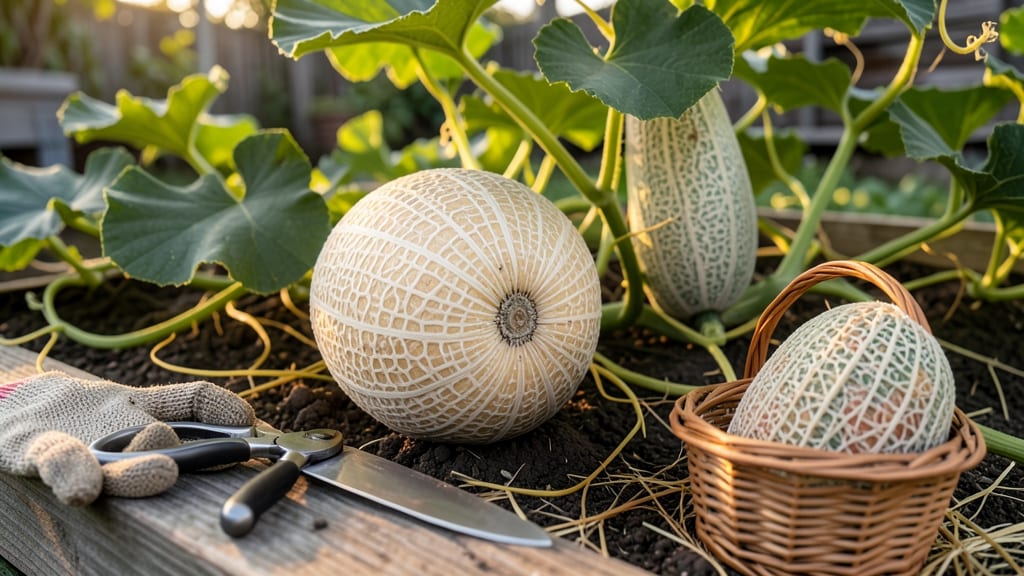
3 Visual and touch tests to check cantaloupe ripeness
Cantaloupes are tricky—one wrong move, and you’ll end up with either a hard, underripe melon or a mushy overripe one. The key? Trust your senses. I’ve harvested hundreds of cantaloupes, and these three simple tests will tell you exactly when to pick without guessing.
Start with the easiest: the vine separation test, which is foolproof if done right.
First, look for the stem near the fruit. A ripe cantaloupe’s stem should slip off with a gentle twist—almost like it’s detaching on its own. If it resists, the melon needs more time.
This works because the plant naturally releases the fruit when fully ripe, making it easier to harvest. Pro tip: Don’t yank the stem—twist it slowly to avoid damaging the vine or the melon’s surface.
Next, examine the skin texture and color. A ripe cantaloupe’s rind turns from dull green to a creamy yellow or tan, often with a net-like pattern that’s more pronounced.
Press your fingernail into the skin: if it gives slightly (like a ripe avocado), it’s ready. A hard, green rind means it’s not there yet, while a too-soft skin signals overripeness.
Here’s where many gardeners go wrong: they assume a bright orange blush means ripeness. That’s usually a sign of sun exposure, not sweetness. The real color change happens on the underside of the melon, where it rests on the vine.
Look for a pale yellow or tan patch—this is your best visual cue.
Cantaloupe Ripeness
The science behind cantaloupe smell: why it’s the most reliable ripeness test
Your nose knows more about cantaloupe ripeness than you might think. When cantaloupes reach peak sweetness, they release volatile organic compounds—natural chemicals that create that unmistakable musky, floral aroma. This scent isn’t just pleasant; it’s a biological signal that the fruit’s sugars and oils have fully developed.
Skipping the sniff test means risking underripe melons that taste bland or overripe ones that turn mealy.
To test properly, press your nose near the stem end of the cantaloupe—the sweetest part. A ripe cantaloupe should smell like a mix of honey, cantaloupe, and a hint of spice.
If it smells faint or grassy, it’s not ready yet. But beware: some varieties have milder scents, so combine this test with the visual and touch methods for accuracy.
🌱
⚠️ Warning: Fake Scents!
Not all strong smells mean ripeness. A fermented or rotten odor signals overripeness. Similarly, some cantaloupes develop a sour or vinegary scent if they’ve been exposed to extreme heat or pests. When in doubt, cross-check with the stem-slip test.
The science behind this scent is fascinating: as cantaloupes ripen, enzymes break down complex sugars into simpler, sweeter compounds. These same enzymes trigger the release of aromatic oils in the fruit’s rind.
The stronger the smell, the more beta-carotene (the compound that gives cantaloupes their orange hue) and lycopene (an antioxidant) are present—making it not just tastier, but healthier too.
Pro tip: If you’re harvesting in hot climates, cantaloupes may ripen faster and develop stronger scents earlier. Conversely, in cooler regions, the aroma might be subtler.
Adjust your expectations based on your local growing conditions. For example, in Zone 9, melons often smell ripe 1-2 weeks earlier than in Zone 5.
For maximum accuracy, test the cantaloupe’s scent in the morning when temperatures are cooler. Heat can mask the natural aroma, leading to false readings. Pair this with the rind color and stem slip tests for foolproof results every time.
👃