
Container Gardens
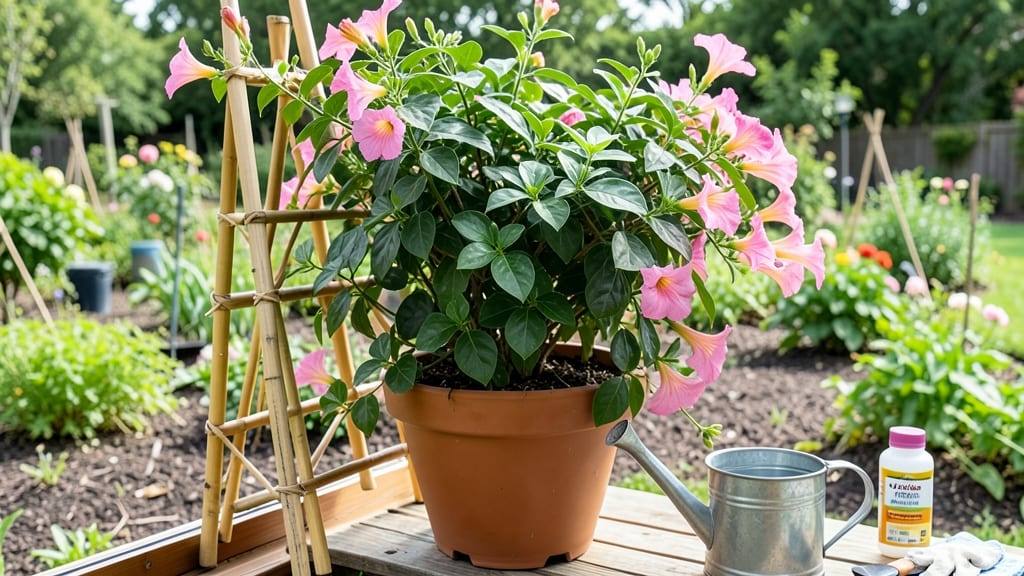
Caring for mandevilla in pots turns your patio into a tropical paradise with minimal effort. 🌿 I’ve grown these dramatic vines for years, and the secret isn’t complicated—it’s about mimicking their natural jungle habitat in a container.
Too much water or not enough sun, and they’ll sulk. Get it right, and you’ll have glossy leaves and trumpet-shaped blooms all summer long.
The key is matching their needs: bright, indirect light (morning sun is ideal), well-draining soil (think cactus mix with perlite), and consistent moisture (let the top inch dry between waterings).
Overwatering is the #1 killer—these plants hate soggy roots. A 10-15 gallon pot with drainage holes gives them enough space to thrive without becoming root-bound.
By pruning after blooms fade, you’ll encourage bushier growth and more flowers next season. Fertilize lightly every 4-6 weeks with a balanced formula, and watch them reward you with vibrant blooms from spring until frost.
The best part? You can move them indoors for winter if you live in a cold climate—just keep them dormant and dry.
Common issues like yellow leaves or pests (usually aphids) have simple fixes: repot every 2 years to refresh the soil, and spray with neem oil if bugs appear. With these basics, your mandevilla will look like it’s been growing in a greenhouse—without the fuss. Let’s get those pots prepped!
📚 In This Guide
- What you need
- Instructions
- Tips and common mistakes
- Wrapping up and next steps
What you need
- ● Pot: A container with drainage holes (10–14 inches in diameter for mature plants; smaller for cuttings). Terracotta or fiberglass works best for airflow.
- ● Well-draining potting mix: A blend of 50% peat moss or coconut coir, 30% perlite or pumice, and 20% compost (avoid heavy garden soil!).
- ● Mandevilla plant: Buy a healthy 6–12-inch specimen from a nursery (look for vibrant leaves and no yellowing).
- ● Watering can or hose with a gentle spray nozzle (avoid over-saturating the roots).
- ● Balanced liquid fertilizer (10-10-10 or 20-20-20) for feeding (dilute to ½ strength).
- ● Pruning shears or clean scissors (sterilize with rubbing alcohol before use).
- ● Support structure: A bamboo stake, trellis, or obelisk (3–5 feet tall) to train vines upward.
- ● Slow-release fertilizer pellets (mix into soil for steady nutrition).
- ● Mulch (orchid bark or pine needles) to retain moisture and mimic tropical conditions.
- ● pH test kit (ideal range: 6.0–6.5; adjust with lime or sulfur if needed).
- ● Humidity tray or pebble tray (for dry climates).
- ● Plant food spray (seaweed-based) for a gentle boost during blooming season.
Step-by-Step instructions for caring for Mandevilla in pots
Here’s how I keep my Mandevilla blooming like crazy—no greenhouse or fancy tools required.
🪴 Step 1: Choose the Right Pot and Drainage
Mandevilla roots need room to spread, so pick a pot at least 12 inches wide with drainage holes. I use terra cotta because it breathes—plastic traps moisture and invites root rot. If your pot lacks holes, drill a few yourself. Place a layer of 1-2 inches of gravel or broken pottery at the bottom to prevent clogging.
This plant hates soggy feet. The gravel layer ensures water flows freely, while the wider pot gives roots space to grow without circling. Watch for roots poking through drainage holes—that’s your sign to upgrade to a larger pot.
☀️ Step 2: Position for Bright, Indirect Light
Mandevilla craves morning sun and afternoon shade. A south- or west-facing window works, but direct afternoon sun scorches leaves. I place mine near a window where they get 4-6 hours of bright light daily but avoid harsh midday rays.
If leaves yellow or stems stretch leggy, your plant needs more light. Rotate the pot a quarter turn weekly so growth stays even. In winter, supplement with a grow light 6-12 inches away for 12-14 hours daily to keep it blooming.
💧 Step 3: Water Deeply but Infrequently
Water when the top 1-2 inches of soil feel dry. Stick your finger in—if it’s damp, wait. I water until water runs freely from the drainage hole, then empty the saucer to prevent root rot. Mandevilla stores water in its stems, so it’s better to underwater than overwater.
In summer, I water every 3-4 days, but in winter, I cut back to once a week. Yellow leaves mean overwatering; crispy edges mean underwatering. Adjust based on your home’s humidity—dry air means more frequent watering.
✂️ Step 4: Prune for Bushier Growth and Blooms
Prune right after blooming to encourage fuller growth. Cut back leggy stems by one-third just above a leaf node. I also pinch off spent flowers to redirect energy to new blooms. Use clean, sharp shears to avoid tearing stems.
If your Mandevilla gets too tall, don’t hesitate to cut it back drastically—it bounces back fast. In spring, I give mine a hard prune to shape it and remove any dead or weak growth. This keeps it compact and flowering like crazy.
🌿 Step 5: Feed and Fertilize for Continuous Blooms
Feed every 2-4 weeks in spring and summer with a balanced liquid fertilizer (10-10-10 or 20-20-20). I dilute it to half-strength to avoid burning roots. In fall and winter, cut back to once a month or stop fertilizing entirely.
Yellow leaves after fertilizing? You’re overdoing it. Flush the soil with water to leach out excess salts. Mandevilla responds best to consistent feeding—don’t skip months, or blooms will taper off.
Tips & tricks for perfect Mandevilla care in pots
Here's what I've learned after keeping Mandevilla plants happy for years—these little details make all the difference.
Pot Material Matters: While terra cotta is ideal, I've also had success with glazed ceramic pots as long as they have drainage. The key is avoiding plastic—it traps moisture and leads to root rot. If you're using a decorative pot without holes, place it inside a cache pot with gravel at the bottom to catch excess water. I also recommend upgrading pots every 2-3 years as roots outgrow their space.
Light Adjustments for Seasons: The 4-6 hours of daily light in Step 2 is perfect for spring and summer, but winter brings challenges. If your Mandevilla starts looking sad in winter, move it closer to the brightest window or add a grow light for those crucial 12-14 hours. I've seen plants revive completely after just a week with proper winter lighting. Rotate the pot weekly even in winter to prevent lopsided growth from one-sided light sources.
Watering Wisdom: The finger test in Step 3 is foolproof, but I've found that checking soil moisture at different depths gives better results. Stick your finger 2 inches deep—if it's dry, water thoroughly. If it's still damp, wait another day. I've ruined several Mandevillas by overwatering during winter when growth naturally slows down. Remember, yellow leaves mean too much water, while crispy edges mean not enough.
Pruning Secrets: Don't be afraid to prune aggressively in spring—your Mandevilla will thank you with bushier growth. I like to cut back stems to about 6 inches from the base in early spring before new growth begins. This encourages multiple branches to form, resulting in a fuller plant. Always use clean shears and make cuts just above a leaf node to promote new growth from that spot.
Pro Tips for Care For Mandevilla In Pots
- Here's what I've learned after keeping Mandevilla plants happy for years—these little details make all the difference.
- Pot Material Matters: While terra cotta is ideal, I've also had success with glazed ceramic pots as long as they have...
- Light Adjustments for Seasons: The 4-6 hours of daily light in Step 2 is perfect for spring and summer, but winter br...
Frequently asked questions
Got questions about keeping your Mandevilla thriving in pots? You’re not alone! Here are answers to the most common concerns—so you can enjoy those stunning blooms without the stress.
How often should I water my potted Mandevilla?
Water your Mandevilla when the top 1–2 inches of soil feel dry. In hot weather, this could mean daily watering, while cooler months may only require watering every 3–4 days. Overwatering is the #1 killer—always ensure pots have drainage holes to prevent root rot.
Can Mandevilla survive winter in pots?
Mandevilla is not frost-tolerant, so bring potted plants indoors before temperatures drop below 40°F (4°C). A bright, cool spot (like a sunroom or garage) works—just keep them out of freezing drafts. If you can’t move them, wrap pots in bubble wrap and mulch the soil for extra protection.
Why are my Mandevilla leaves yellowing or dropping?
Yellow leaves usually signal overwatering or nutrient deficiency. Check for soggy soil (cut back on watering) or brown leaf tips (a sign of fluoride burn from tap water—use rainwater or distilled instead). Dropping leaves? It might be stress from transplant shock or too much direct sun. Move to partial shade and monitor.
How do I prune Mandevilla to encourage more flowers?
Prune in early spring to shape the plant and remove dead growth. Cut back leggy stems by 1/3 to promote bushier growth and more blooms. Deadhead spent flowers regularly to redirect energy to new buds. Use clean, sharp shears and sterilize them with rubbing alcohol to avoid disease.
What’s the best pot size for Mandevilla?
Start with a 5–7 gallon pot for young plants, then upgrade by 1–2 gallons as they grow. Mandevilla has shallow roots, so wider (not deeper) pots prevent root binding. Ensure pots have drainage holes and use a lightweight, well-draining mix. Terracotta pots help wick away excess moisture.
Wrapping up and next steps
Caring for Mandevilla in pots is all about balancing warmth, sunlight, and a little TLC—no green thumb required! 🌿 With the right container, soil, and watering routine, you’ll enjoy vibrant blooms all season long.
Remember, patience and observation are your best tools; adjust as you learn what works for your plant.
Now that you’re armed with these tips, go ahead and give your Mandevilla the love it deserves! Ready for more? Explore creative ways to display your potted Mandevilla—like hanging baskets or vertical gardens—to make your space pop even more!