
Watering
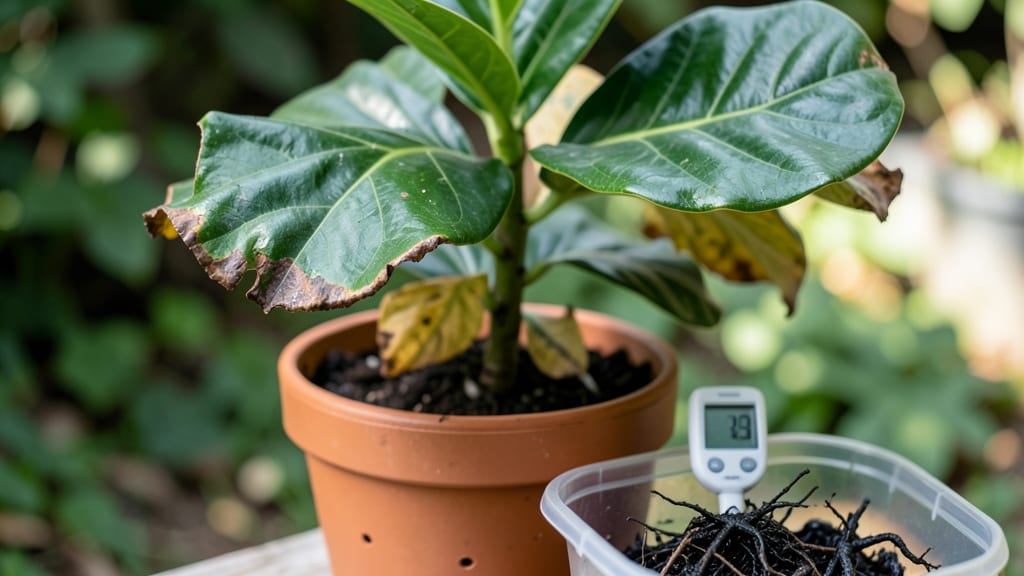
How to fix an overwatered fiddle leaf fig isn't as complicated as it seems—it’s just a matter of addressing the right issues. 🌱 I've nursed more than my share of waterlogged figs back to life, and the fix starts with understanding why soggy soil turns vibrant green into sad, yellowing messes.
First, stop watering immediately and check the roots—if they smell like rot or look mushy, you're dealing with root rot. The good news? Healthy roots can regrow with the right care. Repot into fresh, well-draining soil (think cactus mix with perlite) and choose a pot with drainage holes—no exceptions.
Within weeks, you'll see new growth as the roots recover. Keep the soil lightly moist but never soggy, and place your plant near bright, indirect light. The key is balance: water when the top inch feels dry, and always use a pot with drainage.
This method works for any overwatered houseplant, not just fiddle leaf figs. The secret? Patience and proper drainage—your plant will thank you with glossy new leaves in no time.
Root of the Problem
Overwatering your fiddle leaf fig (Ficus lyrata) isn’t just a minor setback—it’s a silent killer that chokes your plant’s roots by cutting off their access to oxygen and nutrients. When roots sit in soggy soil for too long, they suffocate, leading to rot, wilting, and even death.
But why does this happen in the first place? Let’s dig into the science behind the soggy soil syndrome.
Fiddle leaf figs thrive in well-draining soil that mimics their natural tropical habitat—where rain showers are followed by dry spells. If your potting mix holds too much water (like heavy garden soil or cheap, low-quality blends), excess moisture lingers around the roots instead of draining away.
This creates an anaerobic (oxygen-deprived) environment, where harmful bacteria and fungi—like Pythium and Phytophthora—flourish.
The science: Roots need oxygen to respire (breathe) and convert water and nutrients into energy. Without it, they switch to fermentation, producing toxic alcohol and organic acids that burn root cells. Over time, this leads to:
- Root rot: Soft, mushy roots that turn brown or black.
- Stunted growth: The plant can’t absorb nutrients, so new leaves shrink or yellow.
- Leaf drop: A stress signal as the plant conserves energy.
💡 Pro Tip: Test your soil’s drainage by filling a cup with your potting mix, adding water, and timing how long it takes to drain. If it takes more than 10 minutes, your mix is too dense.
Aim for a blend with perlite, pumice, or orchid bark (20–30%) to improve airflow.
Watering on a schedule—rather than checking soil moisture—is a common trap. Fiddle leaf figs are drought-tolerant and prefer their soil to dry out completely between waterings. If you’re watering:
- Every week (even in winter),
- When the top inch looks dry (but the roots are still wet), or
- Based on a calendar, not the plant’s needs,
you’re likely overdoing it. Overwatering triggers a cascade of issues:
| Symptom | What’s Happening Inside the Plant |
|---|---|
| Yellow leaves (starting at the bottom) | Chlorosis from nutrient uptake failure; roots can’t process magnesium or iron. |
| Wilted leaves that don’t perk up | Root cells collapse from oxygen starvation; the plant can’t pull water upward. |
| Black, foul-smelling stems at the base | Fungal/bacterial infection spreading from rotting roots. |
🌡️ Science Check: Use your finger to test moisture 2–3 inches deep. If it’s damp, wait. If it’s bone-dry, water thoroughly—then let excess drain completely. In winter, reduce watering by 50% since growth slows.
A pot without drainage holes is like a bathtub for your plant—nowhere for water to escape. Even with great soil, moisture pools at the bottom, creating a breeding ground for rot. Fiddle leaf figs must have an exit strategy for excess water.
The physics: Without holes, capillary action pulls water upward from the saucer, re-wetting dry soil and trapping roots in a cycle of sogginess. Over time, this leads to:
- Compacted roots: Roots grow toward the surface in search of oxygen, becoming brittle and prone to breakage.
- Salt buildup: Minerals from tap water crystallize in the soil, further blocking drainage.
- Stunted root systems: Healthy roots should explore downward; instead, they suffocate in a waterlogged layer.
✨ Fix It Fast: If your pot lacks holes, repot immediately into a container with drainage. For decorative pots, place the plant in a cache pot (with holes) inside the outer pot, then empty the saucer after watering.
Fiddle leaf figs love humidity—but not so much that their roots drown. High humidity (like in a steamy bathroom) combined with overwatering creates a perfect storm for fungal growth. While the leaves stay happy, the roots smother.
The balance: Humidity helps prevent leaf browning, but root health depends on dry soil. If your home is humid (60%+), your plant needs even less frequent watering because the air slows evaporation. Signs of humidity-overwatering:
- Leaves stay turgid (firm) but roots rot underneath.
- New growth appears healthy while old leaves yellow.
- White, fuzzy mold on soil surface (a red flag for Powdery Mildew).
🎯 Action Step: Use a hygrometer to monitor humidity. Keep it between 40–60% for roots. If your home is too humid, water only when the soil is completely dry 3–4 inches down.
Revive Your Fiddle Leaf Fig Now
Overwatering can feel like a death sentence for your fiddle leaf fig, but with the right steps, you can nurse it back to health—even if the roots are already suffering. The key is acting fast, diagnosing the damage, and giving your plant a fresh start.
Below, we’ll break down cause-specific fixes so you can target the problem directly, plus prevention tips to keep your fig thriving long-term.
Before diving into fixes, check how bad the overwatering is. Gently remove the plant from its pot and inspect the roots:
- Healthy roots: Firm, white or light tan, with a slight sheen.
- Rotten roots: Mushy, black/brown, or smell foul (like wet socks or alcohol).
- Severely damaged: If most roots are rotten, you’ll need to repot entirely—don’t panic, this is salvageable!
> 💡 Pro Tip: If you’re unsure, sniff the roots. A sour or rotten smell = time to act fast.
If the soil is soggy but roots are still salvageable, drain and aerate ASAP.
🔥 Drainage reset for compacted soil
Cause: Poor drainage + overwatering = suffocated roots. Fix: 1. Empty excess water: Tip the pot sideways to let water drain completely.
- Loosen the soil: Use a chopstick or skewer to poke holes in compacted soil to improve airflow.
- Add perlite or orchid bark: Mix 20-30% perlite into the top 2 inches of soil to break up density.
- Let it dry: Place the pot in a shady spot (no direct sun) and wait 3-5 days before watering again.
> ✨ Prevention: Always use a pot with drainage holes and a well-draining mix (e.g., 50% potting soil, 30% perlite, 20% orchid bark).
🌡️ Root rot treatment (mild to moderate)
Cause: Soft, mushy roots from prolonged sogginess. Fix: 1. Trim the rot: Use sterilized scissors to cut away black/brown roots, leaving only firm ones.
- Hydrogen peroxide rinse (optional but helpful): Soak roots in a 3% hydrogen peroxide solution (1 part peroxide to 4 parts water) for 10 minutes to kill fungus.
- Repot in fresh soil: Use a clean pot (sterilize with rubbing alcohol) and a fast-draining mix.
- Water lightly: Only water when the top 2 inches of soil are bone-dry (stick your finger in to test).
> 🎯 Prevention: Water only when the top 2-3 inches of soil are dry—fiddle leaf figs hate "wet feet."
🔪 Severe root rot? Full revival mode
Cause: Most roots are gone, and the plant looks like a sad, wilted stick. Fix: 1. Prune aggressively: Cut back all rotten roots and trim yellow/brown leaves to reduce stress.
- Propagate healthy stems: If the top is still green, cut 4-6 inch stem cuttings and root them in water or perlite.
- Repot the remaining plant: Use a smaller pot (roots need less space to dry out) with cactus/succulent mix for extra drainage.
- Mistake-proof care: Place in bright, indirect light and water every 7-10 days (check soil moisture first!).
> 💡 Pro Tip: If the stem is still firm, don’t give up—fiddle leaf figs are resilient! Focus on airflow (a small fan on low can help).
The real fix isn’t just saving the plant—it’s changing how you water it. Here’s how to get it right:
| Mistake | Fix | Prevention Tip |
|---|---|---|
| Watering on a schedule | Water only when soil is dry (stick test!) | Use a moisture meter for accuracy. |
| Overpotting | Repot in a smaller container (1-2 inches bigger than roots) | Upgrade pots only every 2-3 years. |
| No drainage holes | Repot immediately in a pot with holes | Always check pots before buying! |
| Using regular potting mix | Switch to a chunky, airy mix (add perlite/pumice) | Mix your own: 40% soil, 30% perlite, 30% bark. |
> 🔥 Hot Tip: Bottom-watering (placing the pot in a tray of water for 10 mins) gives you more control over moisture.
Overwatered plants are extra sensitive to light and humidity—get these right, and recovery speeds up.
- Light: Bright, indirect light (east or north-facing window). Avoid direct sun (it stresses weak roots).
- Humidity: 40-60% is ideal. Use a pebble tray or humidifier if your home is dry.
- Airflow: Gentle breeze (like a small fan on low) prevents fungal growth.
> ✨ Bonus: Wipe leaves with a damp cloth to help the plant photosynthesize better during recovery.
Before you call it a day, run through this quick
Frequently asked questions
How quickly can I expect to see signs of recovery after fixing overwatering?
With proper care, you may notice new growth within 2-4 weeks. The first signs are usually small leaves at the stem's base. Severe cases might take 6-8 weeks to show improvement, especially if roots needed trimming. Patience is key—focus on keeping soil dry and providing bright, indirect light.
Can I use hydrogen peroxide on my fiddle leaf fig if I don't have root rot?
Yes! A diluted solution (1 part 3% hydrogen peroxide to 4 parts water) is safe for preventive care every 2-3 months. It helps kill soil-borne pathogens and improves oxygen levels. Just water the soil thoroughly with the solution, then rinse with plain water after 10 minutes to avoid over-acidifying the soil.
What's the best way to test if my fiddle leaf fig is truly overwatered?
Use the finger test: Stick your finger 2-3 inches deep into the soil. If it feels damp, wait. If it's bone-dry, water thoroughly. For a more accurate check, use a moisture meter—fiddle leaf figs prefer soil in the 30-50% moisture range. Also, gently tug on the plant: if it slides easily, roots may be rotting.
Will my fiddle leaf fig survive if I only have healthy stems but no roots?
Propagate the healthy stems in water or perlite to grow new roots. Place cuttings in bright, indirect light and change water every 3-5 days. Within 4-6 weeks, roots should form. This method works even if the original plant's roots were completely rotted away.
Can I save an overwatered fiddle leaf fig if it's completely wilted and dropping leaves?
Yes, but act fast! First, check the roots—if some are still firm, trim the rot and repot. If the stem is firm, it can regrow. Place in bright, indirect light and reduce watering to every 10-14 days. Avoid pruning leaves unless they're brown or mushy. With proper care, new growth often appears within 3-6 weeks.