
Pests
Here’s how to get rid of bugs on hibiscus naturally without harsh chemicals—your plant’s leaves will stop looking like a bug buffet. 🌿 I’ve watched pests turn vibrant blooms into skeletonized wrecks—until I discovered this neem oil barrier that stops infestations before they start. The key? Disrupting their life cycle with a single spray that’s tough on bugs but harmless to your plant (and the bees). Most natural remedies fail because they only kill what’s visible. This method targets eggs, larvae, and adults—so you break the cycle in one treatment. You’ll need basic supplies: neem oil, water, a spray bottle, and a little patience. No harsh chemicals, no weekly reapplication—just a foolproof shield for your hibiscus. By next week, you’ll see fewer tiny invaders and more bold, glossy leaves. The secret’s in the timing: spray at dusk when bugs are active but before the oil dries. Your hibiscus will thank you with nonstop blooms and zero pest drama. Works for aphids, spider mites, and whiteflies—the usual hibiscus troublemakers. Even my black thumb couldn’t mess this up. Here’s the exact mix and schedule that saved my bushes last summer.
Root Causes of Hibiscus Bugs
Hibiscus plants are stunning, but their vibrant blooms can also attract a variety of pests. Understanding why these bugs show up in the first place is the first step to keeping your hibiscus thriving. Here’s a breakdown of the most common culprits and the science behind their infestations:
🌬️ Why it happens: Hibiscus plants love sunlight, but they hate stagnant air. When foliage grows too dense or plants are spaced too closely together, humidity levels rise, and airflow slows to a crawl.
This creates the perfect breeding ground for aphids, whiteflies, and spider mites, which thrive in warm, moist environments.
- Scientific breakdown: Poor ventilation traps excess moisture on leaves, making them sticky (a sign of honeydew, a favorite snack for ants and fungal growth).
Aphids, for example, reproduce exponentially in these conditions—one female can birth up to 80 nymphs in a week under ideal humidity! - Actionable insight: Prune regularly to maintain 3–4 inches of space between branches, and avoid overwatering. A gentle fan (even outdoors) can mimic natural airflow and deter pests.
🛡️ Why it happens: Stressed hibiscus plants—whether from nutrient deficiencies, drought, or transplant shock—emit chemical signals that attract pests. Bugs like mealybugs and scale insects target weakened plants because their defenses (like triterpenoid compounds in healthy leaves) are compromised.
- Scientific breakdown: Healthy hibiscus leaves produce volatile organic compounds (VOCs) that repel insects. When stressed, these compounds decrease, making the plant an easy target.
For instance, nitrogen-deficient plants (yellowing leaves) are 3x more likely to attract aphids. - Actionable insight: Feed your hibiscus with a balanced fertilizer (10-10-10) every 4–6 weeks and mulch to retain moisture. A quick soil test can reveal deficiencies before pests arrive.
🐛 Why it happens: Some bugs are naturally drawn to hibiscus because of its sweet nectar, soft new growth, or aromatic oils.
For example: - Whiteflies are attracted to the yellow flowers of hibiscus, mistaking them for similar host plants. - Japanese beetles chew on leaves due to the plant’s high phenolic content, which they find irresistible. - Spider mites prefer the fine hairs on hibiscus leaves, which trap moisture and dust—perfect for their webs.
- Scientific breakdown: Pests use pheromones and visual cues to locate hosts. Whiteflies, for instance, detect blue and yellow wavelengths (common in hibiscus blooms) from up to 30 feet away. - Actionable insight: Remove spent flowers promptly and yellowing leaves (a sign of stress).
Planting repellent companions like marigolds or basil nearby can confuse pests.
🌱 Why it happens: Underground pests like root-knot nematodes or fungus gnats often go unnoticed until they weaken the plant from within. These critters thrive in compacted, waterlogged, or overly fertile soil, creating an ideal environment for hibiscus to decline.
- Scientific breakdown: Nematodes release enzymes that break down cell walls, stunting root growth.
Fungus gnats lay eggs in moist, organic-rich soil, and their larvae feed on roots, reducing the plant’s ability to absorb water and nutrients. - Actionable insight: Improve drainage with perlite or sand, and avoid over-fertilizing.
A neem oil soil drench (1 tsp per gallon of water) can deter larvae without harming the plant.
🌞 Why it happens: Bug populations explode during warm, humid seasons (spring to early fall).
For example: - Aphids multiply rapidly when temperatures hit 70–80°F. - Scale insects become active in dry heat, as their waxy coating prevents moisture loss. - Caterpillars (like hibiscus looper larvae) emerge when nights stay above 65°F.
- Scientific breakdown: Many pests enter diapause (a dormant state) in cold weather. As temperatures rise, their metabolism speeds up, leading to rapid reproduction cycles.
A single female whitefly can produce 400+ eggs in her lifetime under optimal conditions! - Actionable insight: Monitor plants weekly during peak seasons and use row covers for young hibiscus to block adult pests before they lay eggs.
Pro Tip: 💡 Prevention is easier than cure! Regularly inspect the undersides of leaves (a hotspot for eggs) and new growth tips—these are prime real estate for pests. Early detection means fewer chemicals and more natural solutions.
Natural Fixes for Hibiscus Bug Problems
Now that you know what’s munching on your hibiscus, let’s tackle those pests with easy, plant-safe solutions that work without harsh chemicals. Below, we’ve matched common hibiscus bugs to their best natural fixes—plus tips to keep them from crashing your party again.
Fix: Neem Oil Spray + Soapy Water Blast Aphids cluster on new growth, leaving sticky residue (honeydew) that attracts mold. Neem oil disrupts their life cycle while soapy water smothers them.
- Mix a neem oil spray:
- 1 tbsp neem oil + 1 tsp mild liquid soap (like Castile) + 1 quart water.
- Stir and pour into a spray bottle.
- 🔥 Spray directly on aphids (focus on undersides of leaves and buds) in the early morning or evening (avoid direct sun, which can burn leaves).
- Reapply every 3–5 days until gone.
- Blast them off with soapy water:
- Fill a spray bottle with 1 tsp dish soap + 1 quart water.
- 👨🍳 Spray aphids until leaves glisten, then rinse with clean water.
- Do this once a week as prevention.
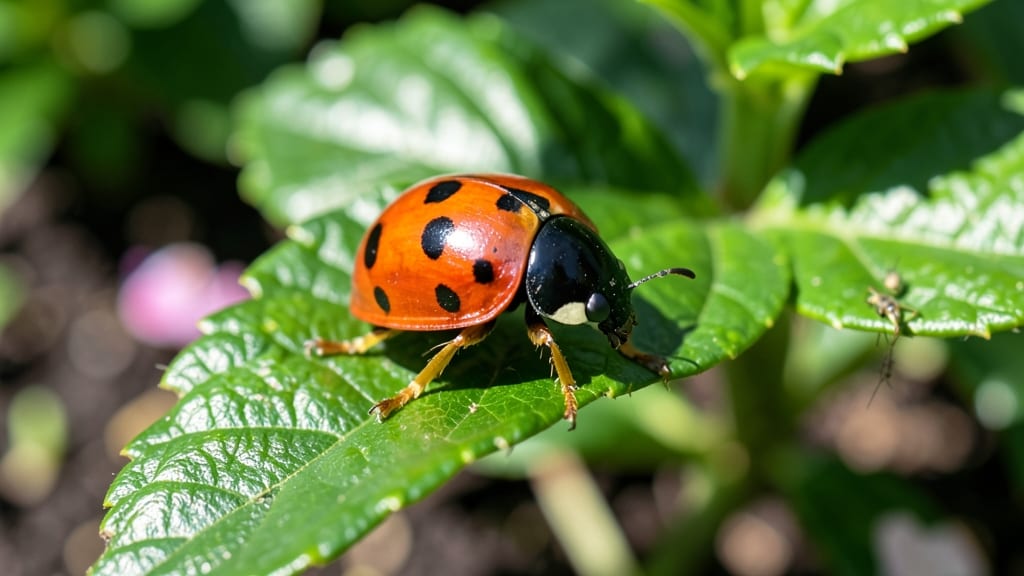
💡 Pro Tip: Ladybugs love aphids! Plant marigolds nearby to attract these natural predators.
Fix: Yellow Sticky Traps + DIY Insecticidal Soap Whiteflies flutter around leaves, weakening plants with their saliva. Sticky traps catch adults, while soap kills larvae.
- Set up yellow sticky traps:
- Buy pre-made yellow cards or make your own (coat yellow paper with petroleum jelly).
- 🎯 Hang traps near hibiscus—whiteflies are drawn to the color.
- Check traps daily and replace when saturated.
- Spray with insecticidal soap:
- Mix 1 tbsp castile soap + 1 quart water.
- 🥘 Spray undersides of leaves (where larvae hide) until damp.
- Repeat every 5–7 days until no more flies appear.
🌡️ Prevention Hack: Mulch with wood chips—whiteflies hate dry soil. Keep hibiscus well-watered but not soggy.
Fix: Rubbing Alcohol Wipe-Down + Diatomaceous Earth Barrier Mealybugs hide in fluffy white clusters, sucking juices and spreading disease. Alcohol kills on contact, while diatomaceous earth (DE) dehydrates them.
- Wipe them off with alcohol:
- Dip a cotton swab in 70% isopropyl alcohol.
- 🔪 Gently dab each mealybug—they’ll dissolve instantly.
- For heavy infestations, spray a 1:1 alcohol-water mix (test on a leaf first!).
- Sprinkle diatomaceous earth:
- Lightly dust food-grade DE around the base of the plant and on leaf undersides.
- ⏰ Reapply after rain—DE loses potency when wet.
✨ Bonus: Encourage parasitic wasps (they hunt mealybugs!). Plant basil or dill nearby to attract them.
Fix: Neem Oil + Scrubbing (For Heavy Cases) Scale insects look like tiny bumps on stems/leaves. They’re hard to kill because of their waxy armor, but neem + scraping works.
- Spray neem oil weekly:
- Use the same neem mix as for aphids (1 tbsp neem + 1 tsp soap + 1 quart water).
- 🍳 Spray thoroughly, including stems where scales hide.
- Repeat every 5–7 days for 3–4 weeks.
- Scrape off stubborn scales:
- For large infestations, use a soft toothbrush dipped in rubbing alcohol to gently scrub off scales.
- 💡 Pro Tip: Prune heavily infested branches and dispose of them in sealed bags.
🎯 Long-Term Defense: Keep hibiscus healthy—stressed plants attract more scales. Fertilize with compost and prune for airflow.
Fix: Water Spray + Neem Oil Mist Spider mites thrive in dry conditions, spinning fine webs. Water washes them away, while neem starves their eggs.
- Blast them with water:
- 🥘 Hold the hose nozzle and spray directly on leaves (especially undersides) for 10–15 seconds.
- Do this every 2–3 days—mites hate humidity!
- Neem oil treatment:
- Use the neem spray recipe above.
- 🌿 Spray in the evening (mites are less active then).
- Repeat weekly until no more webs appear.
🔥 Prevention: Mist hibiscus daily in hot weather—mites cannot survive high humidity.
- 🌱 Plant companion flowers like marigolds, basil, or lavender—they repel pests naturally.
- 🍃 Prune regularly to improve airflow (bugs love crowded, damp leaves).
- 💦 Water at the base (not overhead)—wet leaves attract fungus and soft-bodied bugs.
- 🌞 Give hibiscus 6+ hours of sun—healthy plants resist pests better.
- 🔄 Rotate natural sprays (neem, soap, alcohol) to prevent resistance.
Final Thought: Most hibiscus bugs can be eliminated in 2–4 weeks with consistent care. Act fast—the sooner you treat infestations, the easier they are to control! 🌸💚
Frequently asked questions
Can I use neem oil on hibiscus flowers?
Yes, but apply it carefully! Neem oil is safe for hibiscus flowers when used diluted properly (1 tbsp neem + 1 tsp soap + 1 quart water). Spray only in the early morning or evening to avoid sunburn on petals. Avoid spraying directly on open blooms—focus on leaves and stems where pests hide.
How often should I check my hibiscus for bugs?
Inspect your hibiscus weekly during warm months (spring to fall) and bi-weekly in cooler seasons. Pay special attention to the undersides of leaves and new growth—these are prime hiding spots for eggs and larvae. Early detection makes treatments much easier!
Will companion plants really keep bugs away?
Planting marigolds, basil, or lavender near your hibiscus creates a natural pest barrier. These plants release scents that repel common hibiscus pests like aphids and whiteflies. Plus, they attract beneficial insects like ladybugs and parasitic wasps that hunt pests for you!
What if my hibiscus looks healthy but still has bugs?
Even healthy hibiscus can attract pests, especially during peak growing seasons. The key is prevention: prune for airflow, water at the base (not leaves), and rotate natural sprays like neem oil and soapy water. If bugs persist, check for hidden infestations on stems or roots.
Can I use homemade sprays if I don't have neem oil?
Yes! Try these DIY alternatives:
- Garlic spray: Blend 2 garlic cloves + 1 quart water, strain, and spray on leaves.
- Chili pepper spray: Mix 2 tbsp cayenne pepper + 1 quart water + 1 tsp soap.
- Soapy water: 1 tsp mild dish soap + 1 quart water (great for aphids and whiteflies). Always test sprays on a small leaf first!