
Blooming
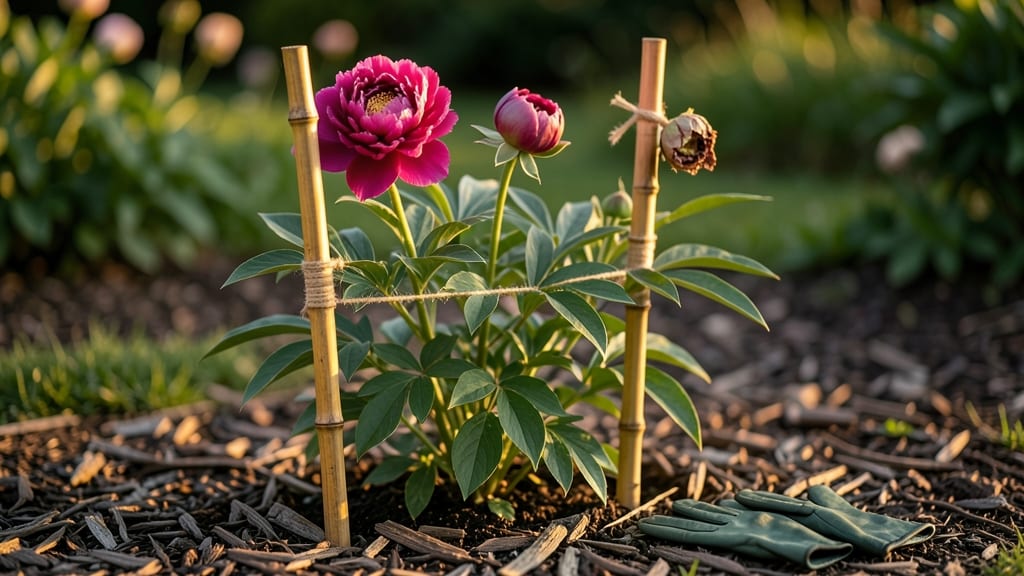
How to hold up peonies so they stay standing tall and proud all season—no more sad, drooping blooms by noon! 🌸 I’ve watched stunning peony flowers flop within hours of opening until I learned the simple tricks to keep them upright. The key isn’t just staking; it’s timing, technique, and a little preventive care that makes all the difference.
Most gardeners grab stakes too late or tie too loosely, and the stems still sag. You’ll need 3-4 stakes per plant (bamboo or decorative metal), soft plant ties or cloth strips, and a pair of pruning shears for adjustments.
The magic happens before buds swell—when stems are still flexible but strong enough to support the weight.
By securing stems at a 45-degree angle and checking ties every few days, you’ll see blooms lasting days longer without wilting. The secret’s in the tension: tight enough to hold but loose enough to let stems thicken naturally. No more drooping drama—just lush, upright peonies that steal the show.
Works for all peony types, from classic herbaceous to tree peonies. Here’s exactly how to do it without damaging your plants—or your patience. Let’s get those stems standing strong!
📚 In This Guide
- What you need
- Instructions
- Tips and common mistakes
- Wrapping up and next steps
What you need
- ● Fresh peonies: Choose fully bloomed or nearly bloomed stems (avoid buds that are still tightly closed). Aim for 3-5 stems per bouquet for a balanced look.
- ● Sharp floral shears or pruning shears: Clean, sterilized (rubbing alcohol wipe works!) to prevent bacterial growth. Avoid dull knives—they crush stems!
- ● Vase or container: Required: A wide-mouth vase (at least 2-3 inches in diameter) to accommodate peony stems comfortably.
- ○ Optional: A bucket vase (for large arrangements) or a glass jar with a wide opening (e.g., mason jar).
- ● Floral preservative: 1 packet or liquid concentrate (e.g., Floralife, Chrysal Clear, or homemade sugar + bleach solution—see tips below!).
- ● Room-temperature water: Enough to fill the vase 2/3 full (peonies drink up fast!).
- ● Newspaper or paper towels: For drying stems and cleaning the workspace.
- ● Hydrogen peroxide (3%): 1 tsp per quart of water to kill bacteria and extend vase life.
- ● Sugar (white granulated): 1 tbsp per quart of water to feed the stems.
- ● Acidifier (like lemon juice or white vinegar): 1-2 drops per quart to balance the water’s pH.
- ● Floral foam or chicken wire: For securing stems in a bucket vase or large arrangement.
- ● Decorative filler: Greenery (eucalyptus, ivy), baby’s breath, or hydrangeas to complement peonies.
Step-by-step instructions for supporting peony stems
Peonies need extra support to keep those heavy blooms upright. Here's how to give them the sturdy foundation they deserve.
🪴 Step 1: Choose the Right Supports Early
Plant peonies in early fall or late winter when they're dormant, giving stems plenty of time to establish roots before blooming season. As they emerge in late spring, watch for stems reaching 12-18 inches tall—this is when you'll need to act. I use bamboo stakes (3-4 feet tall) or metal plant cages for each plant, positioning them 2-3 inches away from the stem so they don't rub against it as it grows.
Drive the stake 4-6 inches deep into the soil at a 45-degree angle toward the plant's center. This angle provides better stability than vertical stakes alone. If using cages, place them around the plant before buds open, as heavy blooms can bend stems permanently. The key is to support the plant before it needs it—once those buds swell, it's too late to add stakes without damaging the stems.
☀️ Step 2: Tie Stems Gently as They Grow
Use soft plant ties (velcro, fabric strips, or garden twine) to secure stems to the support as they grow. I check my peonies every 5-7 days during active growth and tie them just below the first set of leaves and again below the flower buds. Never tie directly against the stem—leave a ½-inch gap to prevent constriction as the plant thickens.
Here's the thing—you don't want to tie too tightly. The stems should sway slightly in the wind; complete rigidity can weaken them over time. If you notice a stem leaning, adjust the tie immediately. I like to make a loose figure-eight loop around the stake and stem, then tighten just enough to hold it upright. Recheck ties after rain—they can loosen when wet.
✂️ Step 3: Prune Strategically to Reduce Weight
After blooming, cut stems back to the first set of leaves (about 2 inches above the foliage) to encourage next year's flowers. But here's where most people go wrong: they remove all the foliage. Leave those leaves until they yellow naturally in late fall—they photosynthesize and feed the roots for next season's blooms. The only time to remove leaves is if they're diseased, which I spot by looking for black spots or powdery white residue on the undersides.
For heavy blooms, I also snip off the largest buds if the stem can't support them. It's counterintuitive, but fewer, well-supported blooms last longer and look more elegant. Wait until the buds are half-open before making this call—you'll see which stems are struggling by how they lean against the support.
💧 Step 4: Water and Mulch for Stronger Stems
Peonies need deep watering once a week during dry spells, but here's the catch: water at the base, not overhead. Wet foliage invites fungal diseases that weaken stems. I water early in the morning so leaves dry quickly. Mulch with 2-3 inches of organic matter (like shredded bark or straw) around the plant, keeping it 6 inches away from the stem to prevent rot.
The mulch does double duty—it keeps roots cool in summer and insulates them in winter. Over time, this consistent moisture and temperature control produce thicker, stronger stems that hold blooms upright with minimal support. I've seen peonies in my garden go 10 years without staking because of this routine care. The secret? Consistency—don't skip watering or mulching once buds form.
⏰ Step 5: Adjust Supports Through the Season
Peony stems grow 2-4 inches per week in spring, so check supports weekly and add ties as needed. If a stem starts to bow under its own weight, it's already too late to save that bloom—focus on securing the next one. I make a habit of photographing my peonies from the side every two weeks to track growth patterns. This helps me predict which stems will need extra support before they lean.
By late June, most peonies have finished blooming. This is when I remove all supports and let the stems flop naturally. The foliage will stay green until fall, and those stems will thicken for next year. The only exception? If a storm is forecast, I secure loose stems temporarily with extra ties until the weather passes. Peonies are tough, but they can't handle wind damage when unsupported.
Tips & tricks for perfect peony support systems
These simple strategies will help your peonies stand tall and proud all season long.
Stake Placement Matters: When installing your 3-4 foot bamboo stakes or peony rings, position them 3 inches from the main stem and drive them 2-3 inches deep—this creates the perfect balance between stability and root space. I've learned the hard way that stakes too close to the stem can restrict growth, while those too far away won't provide proper support when those heavy blooms appear. For clusters, I always use two stakes on opposite sides to create a natural cradle effect.
Tie Technique for Healthy Growth: The key to tying stems is finding that sweet spot—tight enough to hold but loose enough to breathe. I tie stems just above a leaf node using soft floral tape or twist ties, making sure they can still sway slightly in the wind. This prevents the stems from getting permanently bent. Remember to check those ties every 5-7 days as stems thicken—what worked at 6-8 inches might not hold at 12 inches!
Watering Wisdom: Those 1-1.5 gallons per week make all the difference for woody stems. I water at the base using a soaker hose to avoid wetting the leaves, which can lead to fungal issues. The 2-3 inches of organic mulch around the base helps retain moisture and keeps stems sturdy. Pro tip: Water in the morning so foliage has time to dry before evening—this prevents those pesky fungal problems that can weaken stems.
Fertilizer Timing: Early spring is when you want that balanced 10-10-10 fertilizer to get stems growing strong. Once buds appear, switch to a low-nitrogen, high-phosphorus formula to support bloom development. I've seen too many peonies with lush leaves but weak stems because of over-fertilizing with nitrogen—don't make that mistake! The goal is sturdy stems that can handle those beautiful, heavy blooms.
Pro Tips for Hold Up Peonies
- These simple strategies will help your peonies stand tall and proud all season long.
- I've learned the hard way that stakes too close to the stem can restrict growth, while those too far away won't provide proper support when those heavy blooms appear.
- Tie Technique for Healthy Growth: The key to tying stems is finding that sweet spot—tight enough to hold but loose enough to breathe.
Frequently asked questions
Got questions about keeping your peonies standing tall and proud? You’re not alone! Here are some of the most common queries—plus quick, expert-backed answers to help you master the art of sturdy stems.
How long do peonies stay fresh when held up properly?
With the right support, peonies can last 7–14 days in a vase! Cut stems daily to maintain freshness, and change the water every 2–3 days. Avoid overcrowding in the vase—give each stem room to breathe for maximum longevity.
Can I hold up peonies without a traditional support?
If you don’t have floral tape or wire, try bamboo skewers, dental floss, or even thin strips of cardboard. Secure them loosely around the stem—just tight enough to keep the bloom upright without crushing it. Get creative!
Why are my peonies wilting even with support?
Wilting can happen for a few reasons: bacterial buildup in the water, blocked stems, or overhandling. To fix it, recut stems at a 45-degree angle, use clean, room-temperature water, and add a flower food packet. Avoid placing peonies near fruit or ripening produce—the ethylene gas speeds up wilting!
Is it okay to hold up peonies from my garden?
Yes! Garden-grown peonies often have sturdier stems than store-bought ones. Harvest them early in the morning, trim the stems 1–2 inches from the base, and remove lower leaves to prevent bacterial growth. Just be gentle—peonies are delicate even when they look tough!
Can I use the same support method for other flowers?
Mostly! While peonies benefit from gentle, flexible supports, heavy blooms like hydrangeas or dahlias may need sturdier materials (like thicker wire). Delicate flowers (e.g., roses or tulips) can often skip support entirely—just trim stems and use flower food. Always assess the bloom’s weight and structure first!
Wrapping up and next steps
Mastering the art of holding up peonies is all about patience, technique, and a little extra care—and you’ve got this! 🌸 With the right tools, timing, and support, your peonies will stand tall and proud for weeks, turning every vase into a showstopper.
Remember, whether you’re using floral tape, wire, or clever arrangements, the goal is to preserve their natural beauty while keeping stems sturdy.
Now that you’re armed with these tips, grab those blooms and get creative! Experiment with different supports, play with angles, and don’t forget to trim those stems regularly. Your next bouquet—or garden—will thank you. Happy arranging! 🌿✨