
Companion Plants
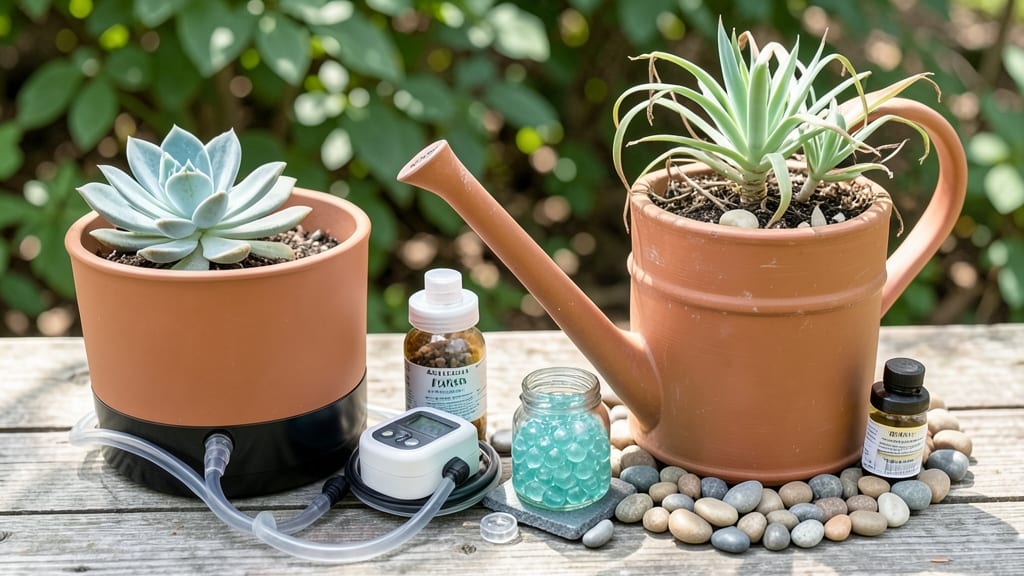
How to keep your outdoor plants watered while away without them suffering—here’s how I’ve left my garden thriving for two weeks without a single wilted leaf.
The key is matching your system to your plants and climate. Succulents need one deep watering before you leave, while thirsty annuals require slow-release moisture.
Grouping pots together creates a microclimate that reduces evaporation, and DIY solutions like buried plastic bottles or sock wicks can work just as well as commercial products.
You’ll return to lush foliage, not a desert landscape. The right setup keeps roots hydrated without drowning them, and I’ll show you exactly which methods work best for different plant types and trip lengths.
Works for everything from container gardens to in-ground beds—no green thumb required. Let’s keep your plants happy while you’re away!
📚 In This Guide
- What you need
- Instructions
- Tips and common mistakes
- Wrapping up and next steps
What you need
- ● Self-watering systems: Drip irrigation kit (with soaker hoses or emitters) – 1-2 per garden section
- ● Olla pots (clay watering pots) – 1-2 per plant (depending on size)
- ● Wick-based planters (for containers) – 1 per pot
- ● Water storage: Large water jugs (5+ gallons) – 1-2 per system
- ○ Rain barrels (optional but ideal) – 1 for larger gardens
- ● Connectors & tubing: Vinyl or flexible irrigation tubing – 10-20 ft, depending on layout
- ● Adapters & connectors (for hoses/fittings) – as needed
- ● Timers & controllers: Smart irrigation timer (solar or battery-powered) – 1 per system
- ● Manual valve (for non-smart setups) – 1 per zone
- ● Extras for DIY setups: Drill (for olla pots) – 1
- ● Non-woven landscape fabric (for wick systems) – small rolls
- ● Stakes or weights (to secure systems) – as needed
- ● Moisture meters – 1-2 for monitoring soil 🌡️
- ● Solar-powered pumps – 1 for larger gardens
- ● Mulch (straw, wood chips) – to retain moisture
- ● Plant-specific saucers (for containers) – to catch overflow
Step-by-Step instructions for vacation-proofing outdoor plants
Here’s how to keep your garden thriving even when you’re out of town—no complicated systems required.
Assess Plant Water Needs and Group Accordingly
First, identify your plants’ water requirements. Group those with similar needs together—succulents and drought-tolerant perennials can share containers or beds, while thirsty annuals like impatiens or coleus need separate care. Observe your garden for 2-3 days before your trip: check which plants wilt first when you delay watering. These are your high-priority plants and should get the most attention in your setup.
Label each grouping with a brightly colored flag or stake so you don’t forget which zone needs special treatment. I like to use a simple color code: red for heavy waterers, yellow for moderate, and green for drought-tolerant. This visual cue saves time when you return—you’ll instantly see which areas need immediate attention.
Install Self-Watering Systems for Critical Plants
For container plants, use leaky pots—fill a secondary container with water, place your potted plant inside it, and let the outer pot wick moisture through drainage holes. This method can keep plants hydrated for 5-7 days without direct watering. For in-ground plants, bury plastic bottles (like 2-liter soda bottles) near the root zone, cut off the top, and fill them with water. The slow release mimics natural rainfall.
For larger beds, soaker hoses are your best friend. Lay them along the base of plants and connect them to a timed outdoor spigot or a battery-operated water timer. Set the timer to run for 10-15 minutes every other day—long enough to saturate the root zone but not enough to cause runoff. Test the setup a few days before your trip by running it while you’re home to ensure even coverage.
Mulch Heavily to Retain Moisture
Spread a 3-4 inch layer of organic mulch (like shredded bark or straw) over the soil surface 2-3 days before your trip. Mulch acts like a blanket, slowing evaporation and keeping roots cool. Focus on high-priority plants first, then work outward. Avoid piling mulch directly against stems—keep it 2 inches away to prevent rot.
For extra insurance, water deeply the night before you leave. Aim for 1-2 inches of water per plant, soaking the root zone thoroughly. You’ll know you’ve done it right when water drips from drainage holes (for containers) or when the soil feels damp 6 inches down (for in-ground plants). This initial deep watering gives your plants a reserve to tap into while you’re away.
Set Up Shade Protection for Hot Climates
If temperatures will exceed 85°F while you’re gone, protect plants from sun scorch by draping lightweight shade cloth (30-50% shade) over vulnerable areas. Secure it with clips or stakes so wind doesn’t tear it away. Focus on leafy annuals, vegetables, and tender perennials—these are most at risk. For containers, move them to a shadier spot under a tree or patio awning if possible.
Test the shade setup a day before your trip. Walk through your garden at midday and adjust coverage as needed. If leaves feel hot to the touch after an hour, add more shade. This step is especially critical for succulents and cacti—too much shade can cause etiolation (stretched, weak growth), but too little can lead to sunburn.
Monitor and Adjust with Smart Tech (Optional)
For peace of mind, smart garden sensors like Blossom or Rachio can alert you to soil moisture levels via your phone. Place sensors near your highest-priority plants and set thresholds for low moisture. If you’re away for more than a week, these devices can even trigger automated watering based on real-time data. While they cost more upfront, they’re a game-changer for long trips or unreliable weather.
If you’re not ready for tech, ask a neighbor to check on your plants mid-trip. Leave a clear note with your contact info and a map of your watering zones. Offer to return the favor for their garden—most people are happy to help for a little reciprocity. This human backup is often the most reliable method of all.
Tips & tricks for vacation-proofing your garden
Took me years of trial-and-error to perfect these simple tricks that'll keep your plants thriving while you're away—without any complicated gadgets or last-minute stress.
Prioritize with the 2-3 Day Test: Step 1's 2-3 day observation period is your secret weapon. I've seen gardeners skip this and come back to wilted annuals that could have been saved. Focus on the plants that show first signs of wilting—these are your high-priority plants that need the leaky pots or 2-liter bottle systems from Step 2. The color-coded flags aren't just decorative; they'll save you hours when you return.
DIY Leaky Pot Upgrade: For container plants, take the leaky pot method from Step 2 to the next level. Use terracotta pots—they wick moisture better than plastic. Drill extra drainage holes in the bottom of your secondary container to create more surface area for water absorption. This can extend hydration to 7-10 days for drought-tolerant plants, giving you extra buffer time for longer trips.
Soaker Hose Pro Tips: When setting up your 10-15 minute soaker hose cycles in Step 2, place a shallow tray or saucer under the hose ends to catch any overflow. This prevents water waste and gives you a visual cue that the system's working. For clay soil gardens, run the hose for 10 minutes—it drains faster than sandy soil which may need the full 15 minutes. Always test with your hose while you're home first!
Mulch Application Strategy: The 3-4 inch mulch layer in Step 3 works best when applied in two stages. Spread a 1-2 inch base layer immediately after your initial deep watering (the night before departure), then add the final 2 inches two days before your trip. This two-step approach prevents mold growth from trapped moisture while maximizing evaporation control. For containers, use a lightweight mulch like straw—it won't compact like wood chips.
Pro Tips for Keep Outdoor Plants Watered While Away
- Took me years of trial-and-error to perfect these simple tricks that'll keep your plants thriving while you're away—without any complicated gadgets or last-minute stress.
- Prioritize with the 2-3 Day Test: Step 1's 2-3 day observation period is your secret weapon.
- DIY Leaky Pot Upgrade: For container plants, take the leaky pot method from Step 2 to the next level.
Frequently asked questions
about keeping outdoor plants watered while away—because even the greenest thumbs need a little reassurance!How often should I water before leaving?
Water deeply 2-3 days before your trip to ensure roots are hydrated. For self-watering systems, fill them the night before to account for overnight evaporation. Pro tip: Check soil moisture—if the top inch is dry, water again!
Can I use ice cubes to water plants while away?
Ice cubes work for small containers (like herbs or succulents) but aren’t ideal for larger plants. They melt slowly, risking root rot if soil stays soggy. For bigger pots, opt for self-watering globes or drip lines instead.
What if it’s really hot or cold while I’m gone?
Extreme temps? Adjust your plan:
- Heatwaves: Use shade cloth + self-watering systems with longer reservoirs (5+ days).
- Freezing temps: Move potted plants to a sheltered spot (garage, porch) or wrap them in burlap.
My plants look wilted when I return—what went wrong?
Wilt can mean overwatering (yellow leaves, mushy stems) or underwatering (dry, crispy edges). Check:
- Soil moisture before filling watering systems.
- Drainage holes—are they clogged?
- Shade exposure (direct sun = faster evaporation).
Are self-watering solutions worth the cost?
Yes! For $20–$50, self-watering globes or drip kits save time, water, and stress. DIY alternatives (like buried bottles) cost pennies but require more effort. Weigh your trip length and plant needs—longer trips = professional systems win.
Wrapping up and next steps
Keeping your outdoor plants thriving while you’re away doesn’t have to be stressful—with the right self-watering hacks, you can enjoy peace of mind and a lush garden upon your return! 🌿 Whether you opt for DIY solutions like the soda bottle trick or invest in smart tech like drip irrigation systems, consistency is key.
Test your setup a few days before your trip to avoid surprises, and always check soil moisture levels to tailor your approach.
You’ve got this! Start small—pick one method to try on your next adventure, and soon, your plants will thank you with vibrant blooms and healthy growth. Ready to set up your vacation-proof garden? Grab your supplies and get started today! ✨