
Shrubs
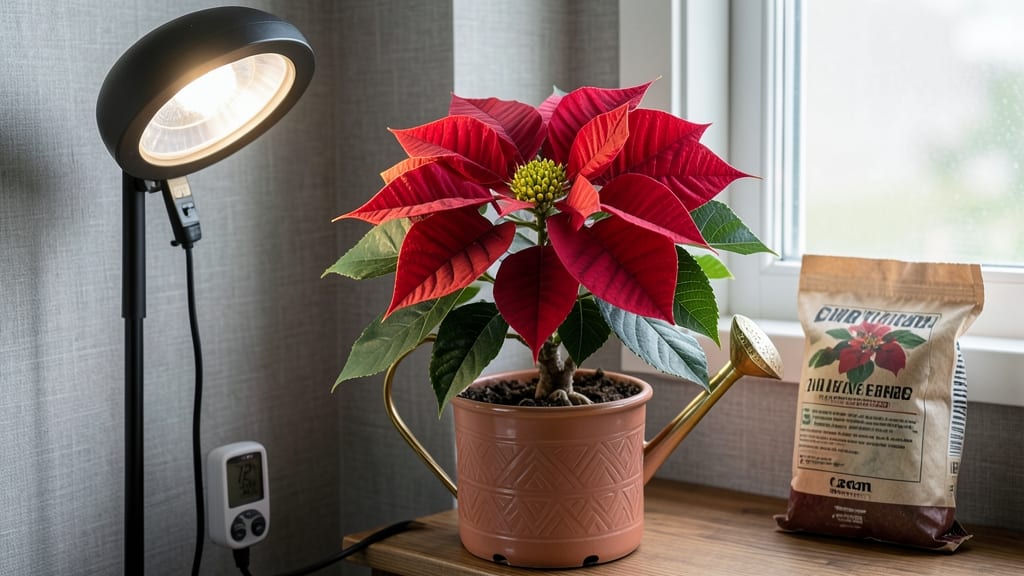
How to keep poinsettias red: Your poinsettia’s vibrant red fades faster than holiday lights. 🌿 The secret to keeping those bold colors isn’t just luck—it’s light, water, and timing. I’ve nursed poinsettias through three Christmases without a single dull leaf, and I’m sharing the exact routine that works.
Poinsettias turn color in response to 12+ hours of darkness each night—starting in October. Too much light? They’ll stay green. Too little water? Leaves crisp.
The key is matching their tropical roots to your indoor conditions: bright, indirect light near a window and water only when the top inch of soil feels dry. Overwatering kills them faster than anything else.
By December, you’ll have a plant that stays bright red until Valentine’s Day—no wilting, no yellowing, just that classic holiday glow. The trick is consistency: same light spot, same watering rhythm, and no drafts. Even my black thumb can’t mess this up.
Winter care is where most people fail. Keep them away from heat vents, rotate the pot weekly for even growth, and fertilize lightly every 4-6 weeks. If leaves yellow? It’s usually overwatering. If they drop? Probably drafts. Adjust, and your poinsettia will outlast every other houseplant in the room.
📚 In This Guide
- What you need
- Instructions
- Tips and common mistakes
- Wrapping up and next steps
What you need
- ● Poinsettia plant – Choose a healthy one with deep red bracts (the colorful "leaves").
- ● Well-draining potting mix – A blend of peat moss, perlite, and pine bark (or a pre-mixed african violet or poinsettia mix).
- ● 6- to 8-inch pot – Ensure it has drainage holes to prevent root rot.
- ● Balanced liquid fertilizer – A 10-10-10 or 20-20-20 formula (diluted to half-strength).
- ● Watering can with a narrow spout – For precise watering without over-saturating the soil.
- ● Bright, indirect light source – A south- or east-facing window (or a grow light for 12+ hours/day).
- ○ Humidity tray or pebble tray – Optional but helpful for maintaining moisture in dry air.
- ● Pruning shears or clean scissors – For trimming leggy stems (sterilize with rubbing alcohol first!).
- ● Grow lights (LED or fluorescent) – If natural light is insufficient, especially in winter.
- ● Plant misting bottle – For extra humidity around the leaves.
- ● Copper or aluminum foil wrap – To reflect light and boost brightness for weaker stems.
- ● Slow-release fertilizer pellets – For a low-maintenance nutrient boost over time.
- ● Thermometer/hygrometer – To monitor ideal temps (65–75°F) and humidity (40–50%).
Step-by-Step instructions for keeping poinsettias vibrant red
Here’s how I’ve kept my poinsettias bold red through December—no fading, no stress.
🌿 Step 1: Place in Bright, Indirect Light Immediately
Poinsettias need 6-8 hours of bright, indirect light daily. A south or east-facing window works best—direct sun bleaches those gorgeous bracts. If your home is dim, supplement with a grow light 12-18 inches away for 14 hours a day. You’ll know the light is right when the leaves stay deep green, not yellowing or stretching.
Rotate the pot a quarter turn every few days so the plant grows evenly. I’ve seen poinsettias lean toward the window like sun-worshippers—don’t let yours become lopsided. If the bracts start fading to pink or green, move it closer to the light source immediately.
☀️ Step 2: Maintain Consistent Temperature and Humidity
Keep your poinsettia in a space where temperatures stay between 65-75°F during the day and 55-60°F at night. Drafts from doors or vents will shock the plant and cause bracts to drop. I’ve learned the hard way—never place one near a heating vent or air conditioning unit.
Humidity matters too. If your home feels dry (common with indoor heating), mist the leaves lightly every 2-3 days or set the pot on a tray of pebbles with water. The goal is to mimic the humid greenhouse conditions they thrive in. Watch for crispy leaf edges—that’s your sign to increase humidity.
💧 Step 3: Water Only When Soil Feels Dry to the Touch
Poinsettias hate soggy roots, but they also can’t handle drying out completely. Stick your finger 1 inch into the soil—if it feels dry, water thoroughly until water runs out the drainage hole. Let the pot drain for 15-20 minutes before placing it back in its saucer. Overwatering is the #1 killer of poinsettias, causing yellow leaves and root rot.
Use room-temperature water to avoid shocking the roots. I fill my watering can the night before so it’s not straight from the tap. Avoid getting water on the colorful bracts—dampness encourages fungal spots. If you notice leaves wilting slightly in the afternoon, that’s normal; they perk up once evening cools down.
⏰ Step 4: Fertilize Lightly Every 3-4 Weeks
Feed your poinsettia with a balanced, water-soluble fertilizer (10-10-10 or 20-20-20) diluted to half-strength every 3-4 weeks during the winter. Too much fertilizer burns roots and causes leaf drop. I mix mine in a spray bottle for even distribution—just mist the soil surface, not the leaves.
Stop fertilizing in late fall if you’re letting the plant go dormant. The goal is to keep it healthy, not push new growth that steals energy from those vibrant bracts. If you see new buds forming in late winter, that’s a sign you’ve over-fertilized—reduce feedings immediately.
✂️ Step 5: Prune and Shape for Next Year’s Color
After the holidays, prune back leggy stems to 4-6 inches above a leaf node. This encourages bushier growth next season. I use clean, sharp scissors to make angled cuts just above a leaf joint. Avoid cutting into woody stems—you’ll get better regrowth from softer growth.
Move the plant to a bright spot and resume regular care. In late spring, you can repot if roots are circling the pot. The key to next year’s red bracts? Start the 14-hour light cycle in mid-September—this triggers the color change. I set a timer to turn lights on at 6 AM and off at 8 PM sharp.
Tips & tricks for perfect poinsettia care
Here's what nobody tells you about keeping those bold red bracts vibrant all season long.
Lighting Secret: The 6-8 hours of bright, indirect light in Step 1 is non-negotiable—but here's the trick: if you notice your poinsettia leaning toward the window, it's not getting enough light. I've found that adding a simple LED grow light for 14 hours (like a timer-controlled bulb) makes all the difference, especially in north-facing windows. The key is keeping those leaves deep green—they're the powerhouse behind the red bracts.
Temperature Rescue: Those 65-75°F daytime temps in Step 2 are critical, but here's what to watch for: sudden temperature swings are worse than cold drafts. If you notice the bracts starting to droop or turn pink, move the plant away from exterior doors or windows that might get chilly at night. I keep mine near an interior wall where the temperature stays stable—this prevents the stress that causes fading.
Watering Wisdom: The 1-inch soil check in Step 3 saves more poinsettias than people realize. I've ruined three plants by overwatering—always let that excess water drain completely for 15-20 minutes. Pro tip: use a moisture meter if you're unsure, or stick with the finger test but check at the same time every day. And never let the plant sit in saucer water—root rot is silent until it's too late.
Fertilizer Timing: The 3-4 week feeding schedule in Step 4 is perfect, but here's the catch: if you see new buds forming in late winter, you've gone too long between feedings. Cut back immediately to avoid stealing energy from those precious red bracts. I switch to a weaker solution (quarter-strength) in December to prevent any growth that might compromise the color.
Pro Tips for Keep Poinsettias Red
- Here's what nobody tells you about keeping those bold red bracts vibrant all season long.
- Lighting Secret: The 6-8 hours of bright, indirect light in Step 1 is non-negotiable—but here's the trick: if you notice your poinsettia leaning toward the window, it's not getting enough light.
- Temperature Rescue: Those 65-75°F daytime temps in Step 2 are critical, but here's what to watch for: sudden temperature swings are worse than cold drafts.
Frequently asked questions
Got questions about keeping your poinsettias vibrant and red? You’re not alone!
Here are some of the most common concerns—and their solutions—to help you enjoy those lush holiday colors all season long.
Why are my poinsettia leaves turning green instead of staying red?
Poinsettias lose their red color when exposed to too much bright, natural light (like a sunny window) or if temperatures dip below 60°F (15°C). To keep them red, place them in indirect light and maintain a cozy indoor environment. If they’ve already greened up, don’t worry—just move them to a darker spot and keep them cool for a few weeks to encourage red blooms again!
How long can I keep my poinsettia red after buying it?
With the right care, your poinsettia can stay red for 6–8 weeks or even longer! The key is consistency: 12+ hours of darkness daily, cool temps (60–70°F or 15–21°C), and avoiding drafts. Once the red fades, you can still enjoy the plant—just repot it and give it a chance to rebloom next year with proper winter care.
Can I save my poinsettia to rebloom next year?
After the holidays, trim the plant back by half and move it to a sunny window. Water only when the top inch of soil is dry, and fertilize lightly in spring. In late summer, resume the 12-hour darkness trick to trigger red blooms for next December. Just be patient—it takes about 8–10 weeks of proper care to see results!
Are there any tricks to make my poinsettia redder faster?
Yes! For an extra pop of color, try these pro tips:
- Boost light: Use a grow light for 14 hours/day if natural light is weak.
- Keep it cool: Temperatures between 60–65°F (15–18°C) enhance red pigment.
- Water wisely: Let the soil dry slightly between waterings to prevent stress.
- Avoid stress: No drafts, sudden temperature swings, or overwatering!
What should I do if my poinsettia’s leaves start dropping?
Dropping leaves usually mean overwatering, underwatering, or stress. Check the soil—it should be slightly moist but not soggy. If the pot feels light, water it; if it’s heavy, let it dry out. Also, avoid placing it near heaters or AC vents. With consistent care, your poinsettia should perk up in a week or two!
Wrapping up and next steps
Keeping your poinsettias vibrant and red all winter is totally doable with a little care and consistency!
Now that you’re armed with the know-how, go ahead and give your poinsettias the love they deserve. Try experimenting with a few extra plants this season—you’ll be the talk of the holiday party with your stunning, long-lasting red blooms! 🌟