
Succulent
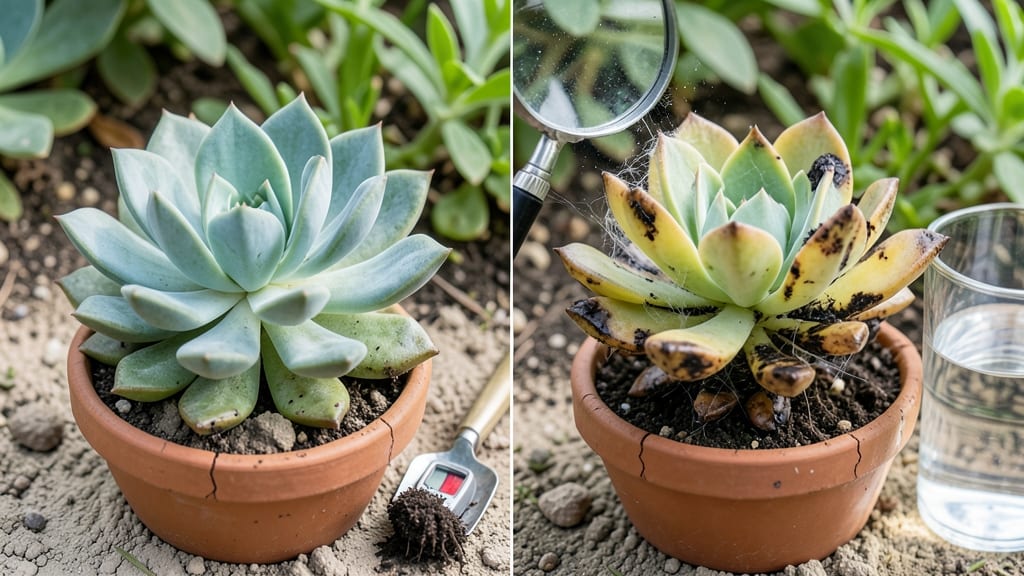
Your succulent’s sad, wrinkled leaves are screaming for help—but how to know if a succulent is overwatered starts with these key signs: mushy stems, blackened bases, and soil that stays damp for days. The good news? You can fix it before it’s too late.
Start by checking the soil—if it’s still soggy after 24 hours, that’s your first warning. Then look for leaves that feel soft or fall over when touched (unlike crisp, firm ones).
Yellowing or translucent patches? That’s rot setting in. The key is acting fast: remove affected leaves, repot in fresh, gritty soil, and let the roots dry out completely.
Once you’ve rescued your plant, adjust your routine. Succulents thrive on neglect—water only when the top inch of soil is bone dry, and use pots with drainage holes.
A quick soil swap every few months keeps roots healthy. With these changes, your plant will bounce back in 2-4 weeks, looking plump and happy again.
Prevention is easier than cleanup: stick your finger in the soil before watering (if it’s damp, wait). Group plants together to create a microclimate that dries faster, and avoid misting leaves—succulents hate humidity. Trust me, your future self will thank you when your collection stays lush and thriving.
Root Causes Of Overwatering
Succulents are masters of survival in arid conditions, but their resilience has a limit—especially when it comes to water. Overwatering isn’t just a gardening mistake; it’s a scientific imbalance that disrupts their natural physiology.
Understanding the why behind soggy soil and wilting leaves helps you prevent future mishaps. Let’s break down the key factors that turn your green thumb into a soggy mess. 🌱💦
Succulents thrive in well-draining soil because their roots hate sitting in water. When planted in regular potting mix or containers without drainage holes, excess moisture pools at the bottom, suffocating roots. Here’s the science:
- Oxygen Deprivation: Roots need oxygen to respire (yes, they "breathe"!). Water displaces air in soil pores, starving roots of oxygen and triggering anaerobic conditions—a toxic environment that leads to root rot.
- Fungal Feasts: Stagnant water creates the perfect breeding ground for fungi like Phytophthora and Pythium, which attack root cells like a buffet. These pathogens clog root tissues, blocking nutrient uptake.
- Salt Buildup: Over time, dissolved minerals in water accumulate in the soil. High salt concentrations draw water out of root cells (osmotic stress), causing them to dehydrate—even when the soil looks wet.
Actionable Fix: Use a cactus/succulent mix (60% mineral grit, 30% potting soil, 10% perlite) and always plant in pots with drainage holes. Pro tip: 💡 Add a layer of pumice or lava rock at the bottom to create extra airflow.
Succulents evolved to store water in their leaves and stems, but they don’t need frequent watering. When you water before the soil dries out completely, you’re essentially drowning their survival strategy. Here’s what happens:
- Cell Swelling: Succulent cells are designed to absorb water slowly. Overwatering causes them to expand too quickly, rupturing cell walls and leading to cytoplasmic leakage—a fancy term for "cell guts spilling out."
- Transpiration Overload: While roots drown, leaves keep transpiring (releasing water vapor). This creates a negative pressure that pulls more water into roots, accelerating rot.
- Nutrient Lockout: Waterlogged soil binds nutrients like nitrogen and phosphorus, making them unavailable to roots. Even if you’re fertilizing, the plant can’t access it.
Actionable Fix: Stick your finger 1–2 inches into the soil. If it’s dry, water; if damp, wait. For desert varieties (like Echeveria or Haworthia), stretch the gap to 3–4 weeks between waterings in winter. 🌡️
Succulents in humid climates (like tropical Kalanchoe) or indoor environments with high moisture levels are far more vulnerable to overwatering. Here’s why:
- Slow Evaporation: High humidity reduces the plant’s ability to release excess moisture through transpiration. Water lingers in the soil longer, increasing rot risk.
- Fungal Spores Thrive: Humidity above 60% creates ideal conditions for Botrytis (gray mold) and Alternaria, which attack leaves and stems.
- Root Suffocation: Warm, humid air slows root respiration, making roots less efficient at oxygen uptake—even if the soil seems dry on top.
Actionable Fix: If you’re in a humid zone, water less frequently and use terracotta pots (they wick away moisture). For indoor plants, place a dehumidifier nearby or group succulents with air-purifying plants like snake plants to balance humidity. ✨
New succulent owners often fall into the trap of "just in case" watering. But here’s the kicker: overwatering begets overwatering. Once roots start rotting, they:
- Lose Structural Integrity: Rotted roots can’t anchor the plant, causing it to topple over or develop a "mushy" base.
- Signal False Thirst: A rotting plant can’t regulate water uptake, so it may appear thirsty (droopy leaves), tricking you into watering more.
- Attract Pests: Weak, waterlogged plants become magnets for mealybugs and scale insects, which further stress the plant.
Actionable Fix: If you suspect overwatering, stop watering immediately and repot the succulent in fresh, dry soil. Trim any black/mushy roots with sterilized scissors and let the plant dry out for 1–2 weeks before resuming a strict watering schedule. 🔪
Revive Your Overwatered Succulent
If your succulent is showing signs of too much love in the form of water, don’t panic—most plants can bounce back with the right care! The key is acting quickly and adjusting your watering habits.
Below, we’ll map out cause-specific fixes to rescue your plant, along with prevention tips to keep it thriving long-term.
Cause: Root rot or cellular damage from prolonged soggy conditions.
How to Fix It:
- 🔪 Trim the Damage
- Use sterilized scissors or pruning shears to cut off any soft, mushy leaves or stems. Snip just above a healthy node (where leaves grow) to encourage regrowth.
- Pro tip: 💡 If the stem is hollow or oozing, it’s too far gone—focus on saving the healthy parts.
- 🌡️ Let It Dry Out - Remove the plant from its pot and gently shake off excess soil to inspect the roots. - If roots are black, mushy, or smell foul, they’re rotten.
Trim these with clean scissors. - Do not water for 3–5 days—let the plant air-dry completely.
- 🏡 Repot in Fresh Soil
- Use a well-draining succulent mix (or add perlite/pumice to regular soil for aeration).
- Choose a terracotta or ceramic pot with drainage holes—plastic traps moisture.
- Pro tip: ✨ Bottom watering (placing the pot in a tray of water for 10 mins) reduces overwatering risks.
- 🌿 Monitor Recovery
- Wait 1–2 weeks before watering again. Check soil moisture by sticking your finger 1 inch deep—if it’s dry, it’s ready.
Cause: Waterlogged stress causing nutrient leaching or cell rupture.
How to Fix It:
- 🌞 Increase Airflow
- Move your succulent to a bright, indirect light spot (no harsh midday sun yet—it’ll need time to recover).
- Improve circulation with a small fan on low setting (succulents love gentle breezes).
- 💧 Adjust Watering Routine
- Water only when the soil is bone-dry (stick your finger in—if it’s damp, wait).
- Use the "finger test" weekly: Insert your finger 1–2 inches deep. If dry, water lightly; if moist, hold off.
- 🍂 Remove Affected Leaves
- Pinch or twist off yellow/translucent leaves at the base. This helps the plant redirect energy to healthy growth.
- 🌱 Fertilize Lightly (If Needed)
- After 4–6 weeks, use a diluted succulent fertilizer (half-strength) to replenish lost nutrients.
- Pro tip: 🎯 Avoid fertilizing in winter—succulents rest and absorb minimally.
Cause: Root rot weakening the plant’s structure or dehydration from overwatered stress.
How to Fix It:
- 🏗️ Propagate Healthy Cuttings (If Needed)
- If the main stem is too weak, snip healthy leaves or stem cuttings (let them dry for 2–3 days to callus).
- Place cuttings on dry soil or a propagation tray—they’ll root in 2–4 weeks.
- 🚿 Hydrate Gently (If Underlying Dehydration)
- If the soil is dry but the plant is wilted, soak the pot for 10 mins, then drain thoroughly.
- Warning: 🚨 If the soil stays soggy, do not water again—focus on drying it out first.
- 🌡️ Create a Humidity Pause
- Succulents hate humidity! Place the pot on a drying rack or pebble tray (with no standing water) to prevent moisture buildup.
- 📅 Water on a Schedule: Stick to a biweekly (or monthly) routine—succulents store water in their leaves! - 🏺 Pot Upgrade: Use terracotta pots (they wick away moisture) or self-watering pots with drainage. - 🌧️ Rainy Day Rescue: If heavy rain is forecasted, move pots indoors or cover them with a breathable cloth. - 🌱 Soil Swap: Refresh soil every 1–2 years—old soil compacts and holds too much water. - 👀 Observe Before You Water: If leaves are plump and firm, wait.
If they’re wrinkled or shriveled, it’s time to hydrate (but only lightly).
Remember: Succulents are tough survivors—with these steps, yours can bounce back stronger than ever! 🌵💪 The key is patience and consistency—overwatering is a habit, not a death sentence.
Frequently asked questions
What does an overwatered succulent look like?
Look for mushy, soft leaves that feel squishy when touched, or stems that collapse easily. You’ll also see yellowing or translucent patches where cells have burst from excess water. Check the base—if it’s black or smells foul, root rot has set in.
Can an overwatered succulent recover?
Yes! With prompt action, most succulents bounce back. Trim mushy parts, repot in dry, gritty soil, and wait 3–5 days before watering again. Healthy cuttings can often root in 2–4 weeks if you propagate them. Patience is key—don’t rush recovery!
How often should I water my succulents to avoid overwatering?
Water only when the top 1–2 inches of soil are completely dry. In summer, this might be every 7–10 days; in winter, stretch it to 3–4 weeks. Use the finger test: Stick your finger in—if it’s damp, wait. Terracotta pots help by wicking moisture away faster.
Why does my succulent look shriveled if I just watered it?
Shriveled leaves after watering often mean root rot—the roots can’t absorb water properly. Stop watering immediately, remove the plant, and inspect for black, mushy roots. Trim the bad ones, repot in fresh soil, and let it dry out completely before trying again.
What’s the difference between overwatered and underwatered succulents?
Overwatered succulents have soft, mushy leaves and may wilt despite damp soil. Underwatered ones have wrinkled, shriveled leaves and dry, crumbly soil. The key difference? Overwatered plants stay heavy and soggy; underwatered ones feel light and dry.