
How To
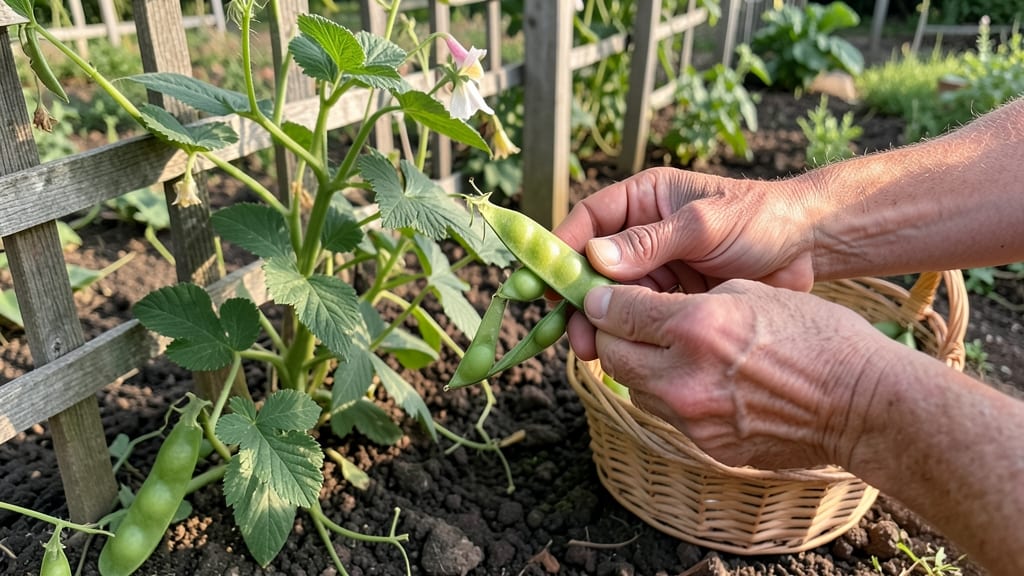
How to know when to pick peas can turn your garden harvest from bland to burstingly sweet in just a few seconds. That crisp snap and tender texture? It all hinges on timing—and missing the window means sacrificing flavor for mealy pods. The good news? With just three simple tactile tests, you can guarantee every pea you harvest is at its peak, whether you're growing sugar snaps, shelling peas, or snow peas in your 6a zone.
Picture this: you're reaching for your first harvest of the season, and those 🌱 peas look perfect—but are they really? Many gardeners wait too long, ending up with overripe pods that lose their sweetness. Others pick too early, missing out on that ideal balance of sugar and crunch.
I'll show you how to read the subtle cues that tell you when those pods are ready, so you never miss the sweet spot again.
We'll cover the pod size that signals readiness, the firmness test that reveals whether your peas are still developing, and how to check seed development without damaging your plants. These aren't just guesswork—they're the same techniques used by experienced gardeners to maximize their harvest.
Plus, I'll share pro tips for harvesting at the right time of day to preserve freshness and flavor.
By the end, you'll know exactly when to reach for those scissors, how often to check your plants, and what to do with your harvest once it's ready—whether you're enjoying fresh pods, freezing them for later, or drying them for winter meals.
Let's make sure every pea you pick is perfect.
3 Tactile tests to determine perfect pea ripeness
Peas reach their peak flavor when harvested at the right moment—before they become tough or mealy. The key lies in your hands: three simple tactile tests reveal whether your peas are ready to pick.
I’ve used these same methods for years in my garden, and they’ve never failed to deliver sweet, crisp pods every time.
First, focus on pod size—this is your baseline. For most varieties, 2-inch pods signal readiness, but sugar snaps need slightly longer 2.5- to 3-inch pods. Measure a few to get a feel for consistency across your plants. Remember, peas grow fast, so check daily once they start flowering.
Next comes the firmness test, where you’ll feel the perfect balance. Gently press a pod between your thumb and forefinger—it should yield slightly but not crush.
Overripe peas feel mushy, while underripe ones resist pressure like a rubber band. This tactile feedback is your secret weapon for avoiding bland harvests.
🌱
Measure pods—2 inches for shelling peas, 2.5-3 inches for sugar snaps. Use a ruler or compare to your thumb for quick checks.
Press pods—slight give means ripe; no give = underripe; mushy = overripe. Test 3-5 pods per plant for accuracy.
Peek inside—visible but plump seeds = perfect. Bulging seeds mean peas are past their prime. Use a flashlight for dim light.
Don’t overlook seed development—this is where flavor hides. Look inside the pod (or gently slice one open if you’re unsure): ripe peas show plump, well-defined seeds that fill about half the pod’s length.
If seeds bulge or touch the pod’s edges, your peas have passed their prime and will taste starchy or tough.
Timing matters too. Always harvest in the morning when pods are cool and crisp. Avoid picking after rain or in extreme heat, as moisture and temperature fluctuations alter texture. Pro tip: Use clean, sharp scissors to snip stems—this prevents damage and encourages more pods to develop.
For continuous harvests, pick peas every 2-3 days. This frequency keeps plants producing and prevents overcrowding. I’ve seen gardens where skipping harvests leads to 50% fewer pods—don’t let that happen to yours!
Track your plants’ progress with a small notebook or app to note when they hit peak ripeness each season.
Finally, trust your instincts. If a pod feels just right—firm, crisp, and slightly resistant—it’s ready. Over time, you’ll develop a sixth sense for pea ripeness. My first harvests were hit-or-miss, but now I can tell you exactly which pods will deliver the sweetest crunch without even tasting them.
✂️
3 Tactile tests to determine perfect pea ripeness
Peas are ready to harvest when they pass these three tactile tests—each one a surefire way to guarantee sweet, crisp pods. The key is combining visual cues with touch to catch them at their peak.
I’ve learned the hard way that waiting even a day too long turns those sweet snaps into tough, starchy messes, so let’s dive into the exact methods I use in my garden.
First, pod size is your best friend. For sugar snap peas, aim for pods that are 2-3 inches long—long enough to hold comfortably between your thumb and forefinger. Shelling peas should be 1.5-2 inches, while snow peas are ready when they’re 3-4 inches but still flat.
Measuring with your fingers is faster than a ruler, and it trains your hands to recognize the perfect length over time.
The second test is firmness—this is where touch becomes critical. Gently squeeze the pod: it should feel firm with slight resistance, like a crisp apple. If it gives too easily, it’s underripe; if it’s rock-hard or wrinkled, it’s overripe.
For sugar snaps, the pod should snap cleanly when bent—no fibrous strings or hollow sounds. Shelling peas should yield slightly under pressure but not collapse.
Finally, check seed development by peering into the pod (or gently squeezing to see through the seam). For shelling peas, seeds should be plump and visible but not filling the pod.
If they’re barely visible, the peas are underripe; if they’re bulging or the pod feels tight, they’ve passed their prime. Sugar snaps should have no visible seeds—just crisp, sweet pods. This step ensures you’re harvesting at the exact moment flavor peaks.
Timing matters too: always harvest in the morning when peas are cool and crispest. Avoid picking after rain or in extreme heat, as this can dull their flavor.
I’ve found that harvesting every 2-3 days for sugar snaps and every 3-4 days for shelling peas keeps production steady and prevents overripening. The more consistently you pick, the more your plants will reward you with fresh pods.