
How To
5 Field-ready tests to determine watermelon ripeness
Picking a watermelon at just the right moment transforms your garden labor into a sweet, juicy reward. But how do you know when that perfectly ripe watermelon is ready to harvest? The answer lies in combining visual cues, tactile tests, and even sound checks.
These five field-tested methods will help you avoid the heartbreak of underripe or overripe melons every time.
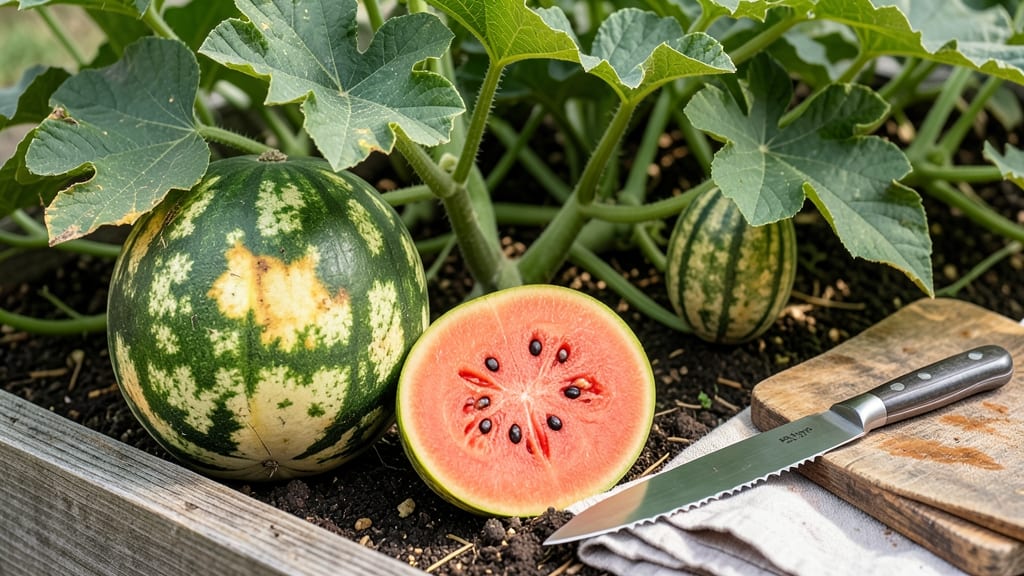
Start with the most reliable indicator: the ground spot. This creamy yellow or orange patch where the watermelon rested on the soil signals ripeness. Look for a spot that’s fully developed—if it’s still pale or greenish, wait a few more days.
This simple trick works for 90% of watermelon varieties, making it the easiest place to begin your assessment.
Next, examine the stem and tendrils near the fruit. A ripe watermelon will have a dry, brown stem that’s starting to separate from the vine. The small tendrils closest to the fruit should also be dry and crispy, not green and flexible.
If the stem is still green and healthy, the melon needs more time on the vine.
Here’s where things get interactive: the thump test. Gently tap the watermelon with your knuckles—if it sounds hollow and deep, it’s likely ripe. An underripe melon will produce a dull, flat sound, while an overripe one may feel mushy or hollow-sounding with a mushy interior.
This test works best on medium-sized melons (about 10-12 inches in diameter).
Look for a creamy yellow/orange patch where the melon touched soil. Fully developed spots = ripe!
Check for dry, brown stem and crispy tendrils near the fruit. Green = not ready!
Tap melon—hollow sound = ripe. Dull = underripe; mushy = overripe.
Press thumbnail into rind side. If it doesn’t puncture, melon is ripe.
Check for deep, uniform color (no green patches). Darker = sweeter!
Don’t overlook the rind hardness test—it’s often overlooked but incredibly effective. Press your thumbnail into the side of the melon (not the bottom). If your nail doesn’t puncture the rind, the melon is ready.
A soft spot means it needs more time, while a too-hard rind can indicate underripeness or poor soil conditions.
Finally, assess the overall color. A ripe watermelon should have a deep, consistent hue—whether that’s dark green (for varieties like Sugar Baby), striped (like Crimson Sweet), or solid dark (like Charleston Gray).
Avoid melons with green patches or uneven coloring, as these often indicate underripeness or poor growing conditions.
Pro tip: Combine these tests for the most accurate results. For example, a melon with a creamy ground spot and dry stem but fails the thump test might still need a day or two.
Conversely, if three or more tests point to ripeness, it’s time to harvest. Remember, overripe melons lose sweetness and develop a grainy texture, so timing is everything!
Regional variations can affect ripening speed—watermelons in hot, dry climates may ripen faster than those in cooler, humid areas. Always adjust your expectations based on your local growing conditions. With these tests in your toolkit, you’ll never second-guess your watermelon harvest again!
5 Field-ready tests to determine watermelon ripeness
Picking a watermelon at the perfect moment requires more than just guessing—it’s about reading your plant’s signals. The ground spot, where the melon touches the soil, is your first clue. A ripe watermelon develops a creamy yellow spot here, signaling sugar development inside.
Next, check the stem tendrils. When they turn brown and dry, it’s a clear sign the watermelon is ready. These tendrils act like nature’s timer, shriveled up when the fruit is fully mature.
🔹 Visual Element: Numbered Highlights 🔹
The thump test is a classic, but don’t rely on it alone. Tap the watermelon with your knuckles—if it sounds hollow, it’s likely ripe. However, this method can be misleading in very dry or wet conditions.
For a tactile check, press your fingernail into the rind. If it doesn’t puncture easily, the watermelon is ready. A soft spot means it needs more time to mature.
Finally, try the stem separation test. Gently twist the stem near the fruit—if it comes off cleanly with a dry, brown stem, your watermelon is at peak ripeness.
Pro tip: Combine these tests for accuracy. A watermelon passing three or more of these checks is almost guaranteed to be sweet and juicy.