
Planting
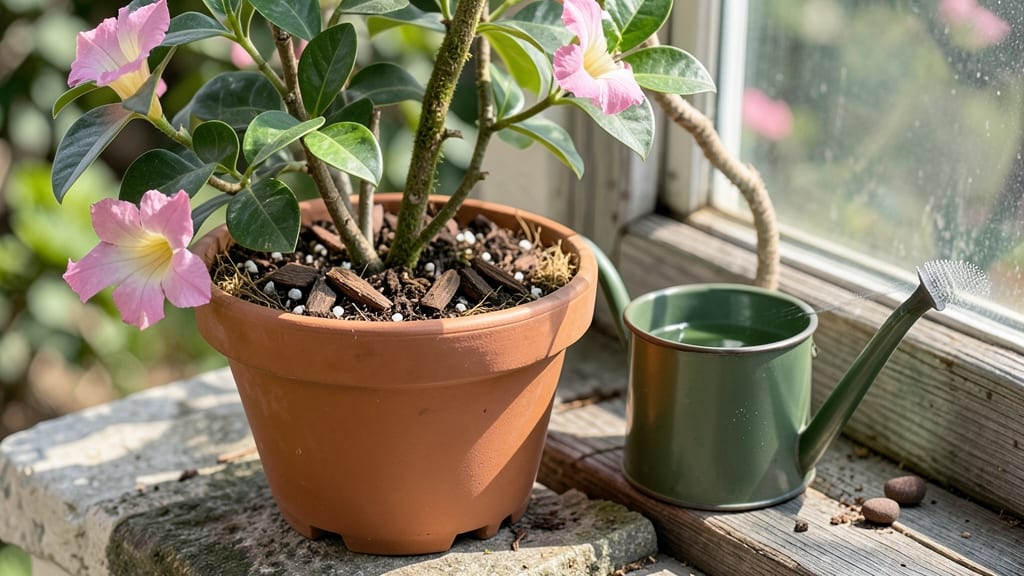
Caring for a mandevilla plant in pots turns your patio into a tropical paradise with bold, trumpet-shaped blooms that last all summer. 🌸 I've rescued more struggling mandevillas than I'd like to admit—most problems come from one simple mistake: treating them like houseplants instead of tropical vines.
The key is bright, indirect light (think morning sun with afternoon shade) and fast-draining soil—these plants hate soggy roots. I use a mix of potting soil, perlite, and orchid bark to keep things airy, and always add a drainage hole (even if it means drilling one yourself).
Water when the top inch feels dry, and never let them sit in saucers of water.
With proper care, your mandevilla will reward you with vines that cascade 6+ feet and nonstop blooms from spring through fall. The secret? Pruning after flowering to encourage bushier growth, and moving pots indoors before frost hits.
This works for both patio containers and hanging baskets—just adjust the pot size based on how much vine you want. Let's get those blooms going!
📚 In This Guide
- What you need
- Instructions
- Tips and common mistakes
- Wrapping up and next steps
What you need
- ● Pot: A container with drainage holes (5–7 inches in diameter for small plants, 10+ inches for mature vines). Terracotta or fabric pots work best!
- ● Well-draining potting mix: A blend of cactus/succulent mix (50%), perlite or pumice (20%), and peanut hulls or orchid bark (30%) for aeration.
- ● Mandevilla plant: Healthy cutting or nursery-grown vine (choose a variety like Mandevilla sanderi or Mandevilla boliviana for vibrant blooms!).
- ● Watering can or hose with a gentle spray nozzle: Avoid soggy roots—aim for deep but infrequent watering.
- ● Balanced liquid fertilizer (10-10-10 or 20-20-20): Diluted to half-strength during growing season (spring–fall).
- ● Pruning shears or sharp scissors: Sterilized to prevent disease when trimming.
- ○ Support structure (optional but recommended): A trellis, moss pole, or decorative stake to guide the vine’s growth.
- ● Slow-release fertilizer pellets: Mix into soil at planting for steady nutrients.
- ● Moisture meter: To check soil dryness before watering.
- ● Mulch (orchid bark or coconut coir): Retains moisture and mimics tropical conditions.
- ● Grow lights (LED or fluorescent): If your Mandevilla gets less than 6 hours of sunlight daily.
- ● Humidity tray or pebble tray: Boosts humidity in dry climates (especially in winter).
Step-by-Step instructions for thriving Mandevilla in containers
Here's the straightforward routine I use to keep my mandevillas blooming like crazy all season long.
☀️ Step 1: Position for Maximum Sunlight
Mandevilla plants demand bright, indirect light for at least 6-8 hours daily. A south or west-facing patio gets them closest to their tropical origins, but they'll tolerate east exposure if you rotate the pot weekly. You'll know they're getting enough light when new growth appears every 2-3 weeks and leaves stay a vibrant green.
If leaves start yellowing or stems grow leggy, your plant is reaching for more light. Move it within 3 feet of a window or supplement with a grow light 12-18 inches away for 14 hours daily. The key is avoiding harsh midday sun—it scorches delicate foliage. Dappled shade in afternoon works perfectly.
💧 Step 2: Water with Precision
Let the top 1-2 inches of soil dry out completely between waterings—that's when roots actively seek moisture. Stick your finger in the soil: if it feels dry up to your first knuckle, it's time. Overwatering is the #1 killer of potted mandevillas, causing root rot that shows up as yellowing leaves and a foul smell.
Water deeply until it runs freely from the drainage holes, then empty the saucer immediately. This ensures roots get oxygen while preventing waterlogged conditions. In summer, you'll water every 2-3 days; in winter, stretch that to once weekly. Always use room-temperature water—cold shocks the roots.
🪴 Step 3: Feed During Active Growth
Start fertilizing in spring when you see new growth, and continue every 2 weeks through summer. I use a balanced liquid fertilizer (10-10-10) diluted to half-strength—this prevents salt buildup that burns roots. The secret is consistency: mandevillas respond best to regular light feedings rather than heavy doses.
Look for dark green leaves and frequent blooms as your signal everything's working. If leaves develop brown tips, you're over-fertilizing. Flush the soil by watering 3 times in succession to leach out excess salts. Stop fertilizing completely in fall as growth slows for winter dormancy.
✂️ Step 4: Prune for Shape and Blooms
Prune right after flowering to encourage bushier growth. Cut back leggy stems by one-third their length just above a leaf node where new growth will emerge. This is also when you shape the plant—pinch back tips to create a fuller form. The goal is to maintain an open center that allows light to reach inner stems.
Deadhead spent blooms regularly to redirect the plant's energy into new flowers. You'll see a surge of fresh buds within 2-3 weeks of pruning. In late fall, give your mandevilla a harder prune, cutting back half the plant to prepare for dormancy. This prevents overgrowth and makes winter care easier.
⏰ Step 5: Winter Care for Next Year's Growth
When temperatures drop below 50°F at night, move your mandevilla indoors to a bright spot. Reduce watering to every 10-14 days and stop fertilizing entirely. The plant will enter dormancy, dropping some leaves—this is normal. Keep it in a cool (60-65°F) but bright location until spring.
In late winter, resume watering when soil stays dry for 3-4 weeks. You'll see new growth within 4-6 weeks—that's your cue to restart fertilizing. This winter rest period is crucial for robust spring blooming. If you notice any pests during dormancy, wipe leaves with a damp cloth and treat with neem oil if needed.
Tips & tricks for perfect Mandevilla plant care in pots
These little details make all the difference when growing Mandevilla vines that stay healthy and bloom beautifully.
Container Size Matters: That 12-14 inch diameter recommendation isn't arbitrary—Mandevilla roots grow aggressively but prefer slightly snug spaces. If you choose a pot larger than 14 inches, the extra soil stays damp too long, inviting root rot. I've seen vines in 16-inch pots struggle with soggy roots even when watering schedules were perfect. The key is to repot only when you see roots circling the drainage holes, which usually happens every 2-3 years.
Light Positioning Secrets: The 6-8 hours of bright, indirect light is non-negotiable, but placement matters just as much. I've found that positioning pots 2-3 feet back from the window creates the perfect diffusion—close enough for strong light but far enough to avoid leaf scorch. For winter grow lights, place them 6-12 inches above the plant and use them for 12-14 hours daily to mimic summer daylight. The goal is to maintain that glossy, dark green leaf color year-round.
Watering Wisdom: The finger test is foolproof, but timing matters just as much. When I water in the morning, I notice the soil dries faster, preventing fungal issues. In summer, I set a reminder every 2-3 days, but I always check that top 1-2 inches before watering—sometimes the weather changes the schedule. Pro tip: If water runs straight through without wetting the soil, your pot needs that extra 1-2 inch gravel layer to prevent drainage issues.
Pruning Strategy: That one-third cut in Step 4 isn't just about shape—it's about stimulating growth. When you cut just above a leaf node, you're telling the plant "grow here" rather than letting it stretch upward. I've found that making these cuts in early spring (when new growth begins) gives the vine time to recover before summer heat. And that second trim after blooming? It's not just about looks—removing spent flowers redirects energy to new buds for that second flush.
Pro Tips for Care For A Mandevilla Plant In Pots
- These little details make all the difference when growing Mandevilla vines that stay healthy and bloom beautifully.
- Container Size Matters: That 12-14 inch diameter recommendation isn't arbitrary—Mandevilla roots grow aggressively but prefer slightly snug spaces.
- Light Positioning Secrets: The 6-8 hours of bright, indirect light is non-negotiable, but placement matters just as much.
Frequently asked questions
How often should I water my potted Mandevilla?
Water your Mandevilla when the top 1-2 inches of soil feel dry to the touch. Typically, this means watering every 2-3 days in summer and reducing to once a week in winter. Overwatering is the #1 killer—always ensure pots have drainage holes to prevent soggy roots.
Can Mandevilla survive winter in pots?
Mandevilla is not frost-hardy, so move pots indoors before temperatures drop below 50°F (10°C). A bright, cool spot (like a sunroom) with moderate watering keeps it dormant until spring. Resume regular care when nights stay above 55°F (13°C).
Why are my Mandevilla leaves yellowing?
Yellow leaves usually signal overwatering or nutrient deficiency. Check for:
- Mushy stems = Too much water (let soil dry out more).
- Yellow edges = Underwatering or low humidity (mist leaves or use a pebble tray).
- Pale leaves = Needs fertilizer (use a balanced liquid feed every 4-6 weeks in growing season).
How do I prune a potted Mandevilla for bushier growth?
Prune in early spring or after flowering to shape the plant. Cut back leggy stems by ⅓ to encourage branching. Use clean, sharp shears and sterilize cuts with cinnamon powder to prevent disease. Deadhead spent blooms to redirect energy to new growth.
What’s the best pot size for a Mandevilla?
Start with a pot 2-3 inches larger than the root ball to allow growth. Mandevilla thrives in containers with good drainage—terracotta or fabric pots work well. Avoid oversized pots; they hold too much moisture and stunt blooming. Repot every 2-3 years or when roots circle the pot.
Why isn’t my Mandevilla blooming?
Blooms love sunlight, warmth, and nutrients! Check these fixes:
- Light: Move to bright, indirect light (south or west-facing spot).
- Fertilizer: Use a bloom booster (like 10-30-20) every 2 weeks in spring/summer.
- Stress**: Avoid sudden changes in water or temperature.
Wrapping up and next steps
Caring for a Mandevilla in pots is all about balancing sunlight, water, and love—and with these tips, you’ll watch your vine explode into vibrant blooms! 🌸 Remember, patience and consistency are key, whether you’re pruning, fertilizing, or troubleshooting pests.
Your effort will pay off with a stunning, low-maintenance plant that thrives year after year.
Ready to see your Mandevilla flourish even more? Experiment with training techniques or try propagating cuttings to expand your collection—your green thumb is growing stronger every day! 🌱