
Size
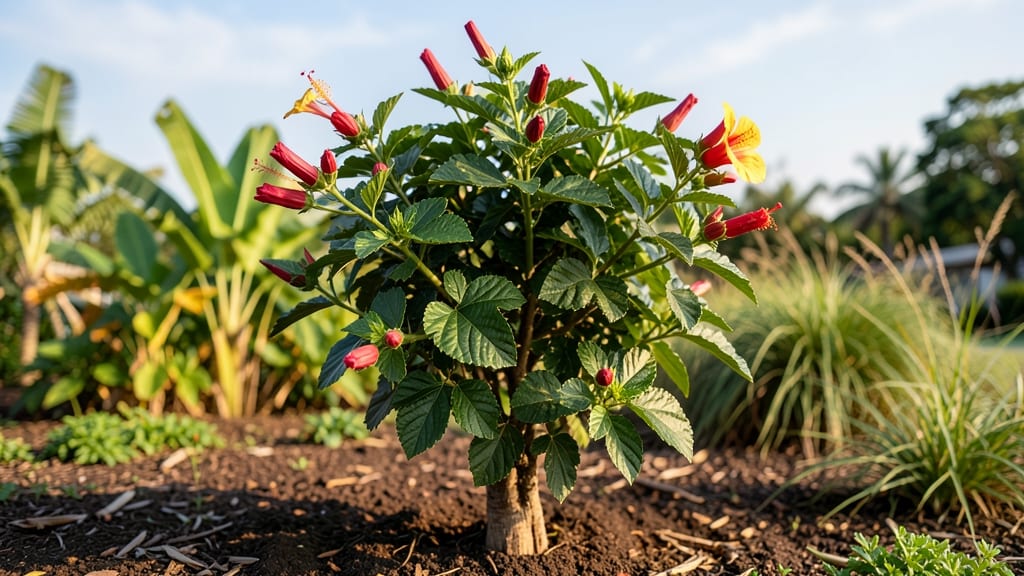
How to grow roselle (Hibiscus sabdariffa) in your backyard is like bringing a slice of West Africa to your doorstep. 🌿 This vibrant plant thrives even in small spaces, producing edible calyces that make tangy teas and jams—plus stunning red blooms that hummingbirds adore.
The key to success is mimicking its tropical roots: warm soil, consistent moisture, and plenty of sunlight. Unlike fussy hibiscus, roselle grows fast—expect 3-4 foot plants by midsummer—and handles containers beautifully, making it perfect for balconies or patio corners.
You’ll harvest those prized calyces starting 8-10 weeks after planting, with each plant yielding 50-100 edible flower buds per season. The flavor? Bright, tart, and impossible to resist—once you try fresh roselle tea, store-bought versions won’t compare.
Works in zones 9-11 and as an annual in cooler climates. Even if you’ve never grown hibiscus before, roselle’s forgiving nature makes it a beginner-friendly tropical superstar. Ready to grow yours?
📚 In This Guide
- What you need
- Instructions
- Tips and common mistakes
- Wrapping up and next steps
What you need
- ● Roselle seeds or seedlings: 3–5 seeds (or 1–2 healthy seedlings) per pot or garden spot. Opt for organic, non-GMO seeds for best results.
- ● Well-draining potting mix: 5–10 gallons (depending on container size). Use a blend of coco coir, perlite, and compost (60:20:20 ratio) to mimic tropical soil.
- ● Containers or garden bed: Containers: 5–15 gallon pots with drainage holes (roselle needs room to grow!).
- ● Garden bed: Full sun (6+ hours/day) with loose, fertile soil (pH 6.0–6.5).
- ● Fertilizer: Balanced liquid fertilizer (e.g., 10-10-10 NPK) for seedlings.
- ● Organic compost or worm castings (1 cup per plant) for mature plants.
- ● Watering can or hose with a gentle spray nozzle: Roselle loves moisture but hates soggy roots!
- ○ Mulch (optional but helpful): Straw or shredded leaves to retain moisture and suppress weeds.
- ● Warmth: Roselle thrives in temperatures above 70°F (21°C). Start seeds indoors 8–10 weeks before the last frost or wait until soil is warm.
- ● Sunlight: Full sun (6+ hours/day) is a must—partial shade can reduce flower/fruit production.
- ● Humidity: Mimic tropical conditions with daily misting or a humidity tray if growing indoors.
- ● Patience: Roselle takes 4–6 months to bear fruit, but the wait is worth it!
- ● Trellis or stakes (3–4 ft tall) to support heavy flower/fruit clusters.
- ● Pruning shears for shaping and harvesting.
- ● Epsom salt (1 tbsp/month) for magnesium boosts in flowering stages.
- ● Neem oil or insecticidal soap to deter pests like aphids or whiteflies.
Step-by-step instructions for growing roselle (hibiscus sabdariffa)
Here's how to cultivate this vibrant tropical plant successfully, even in limited spaces.
🌱 Step 1: Select the Right Location and Prepare the Soil
Roselle thrives in full sun (6-8 hours daily) and warm conditions, making it ideal for containers or warm climates. Choose a spot with well-draining soil—this plant despises soggy roots. If growing in containers, ensure pots are at least 12 inches deep with drainage holes. I prefer a mix of 50% potting soil, 30% perlite, and 20% compost for optimal aeration and nutrients.
For in-ground planting, amend the soil with 2-3 inches of compost and a handful of balanced fertilizer (10-10-10) to kickstart growth. Roselle’s deep taproot means loose, fertile soil is critical—compacted soil stunts root development and reduces flower production. Test your soil’s pH; roselle prefers 6.0-6.5. If your soil is heavier clay, mix in sand or coconut coir to improve drainage.
☀️ Step 2: Start Seeds Indoors or Transplant Young Plants
Begin seeds indoors 8-10 weeks before your last frost in 70-75°F conditions. Sow seeds ¼ inch deep in small pots filled with seed-starting mix. Keep the soil consistently moist but not soggy—roselle seeds germinate slowly, often taking 14-21 days. I use a humidity dome to retain moisture and speed up germination.
Once seedlings develop 2-3 true leaves (not just the initial cotyledons), transplant them into 3-inch pots. Harden them off for 7-10 days before moving outdoors after the last frost. If you’re in a warm climate, you can direct-sow seeds ½ inch deep in spring once soil temperatures reach 65°F. Thin seedlings to 18-24 inches apart—crowding leads to weak stems and fewer flowers.
💧 Step 3: Water and Fertilize for Optimal Growth
Roselle needs 1-1.5 inches of water weekly, but adjust based on rainfall and container size. Water deeply at the base to encourage deep root growth—surface watering promotes shallow roots and weak stems. Let the top 1-2 inches of soil dry out between waterings to prevent root rot. Mulch with 2-3 inches of straw or wood chips to retain moisture and suppress weeds.
Feed plants every 4-6 weeks with a low-nitrogen fertilizer (5-10-10) to promote flowering and fruiting. Over-fertilizing with nitrogen results in lush foliage but fewer flowers. I also add 1 tablespoon of Epsom salt per gallon of water monthly to boost magnesium, which enhances flower and calyx development. Stop fertilizing 6-8 weeks before harvest to improve flavor.
✂️ Step 4: Prune and Support for Maximum Harvest
Pinch back the tips of young plants to encourage bushier growth. Remove any yellow or diseased leaves immediately to prevent spread. As the plant grows, stake or cage it—roselle can reach 6-10 feet tall in ideal conditions. Use bamboo stakes or a tomato cage to support the heavy flower clusters and prevent breakage.
Harvest begins 4-5 months after planting when the calyces (flower buds) turn deep red. Twist them gently to detach—don’t cut, as this can damage the stem. Harvest in the morning for the best flavor. Prune back 1/3 of the plant after the first harvest to stimulate new growth and a second flush of flowers. In warm climates, roselle can produce 2-3 harvests per year.
🌿 Step 5: Overwintering and Long-Term Care
If growing in containers, move plants indoors before frost or to a protected greenhouse. Reduce watering but keep soil slightly moist. Prune back ½ of the plant to conserve energy. In frost-free zones, roselle can grow year-round with minimal care—just continue watering and fertilizing lightly.
In colder climates, dig up tubers in fall, trim back the foliage, and store them in dry peat moss in a cool, dark place. Replant the following spring. Roselle is a perennial in zones 9-11 but often treated as an annual in cooler areas due to its tropical nature. With proper care, even a small container can yield dozens of calyces for tea, jams, or stews.
Tips & tricks for growing roselle (hibiscus sabdariffa)
Real talk: Growing roselle in limited spaces is totally doable—here’s how to avoid the most common pitfalls and maximize your harvest.
Sunlight Strategy: While roselle needs that full 6-8 hours of daily sun, don’t assume every sunny spot is equal. If you’re growing in containers, rotate them every few days to ensure even exposure. South-facing windowsills or balconies work well, but supplement with a grow light for 2-3 hours if natural light falls short during cloudy periods. I’ve seen roselle plants in my urban balcony thrive with this extra light boost, especially in early spring or late fall when days are shorter.
Soil Science: That 50-30-20 soil mix (potting soil, perlite, compost) is non-negotiable for container growing. For in-ground planting, the key is loosening compacted soil—roselle’s deep taproot needs space to explore. Before planting, use a garden fork to break up soil to at least 12 inches deep. If your soil tests above 6.5 pH, add sulfur gradually (following package instructions) to bring it down—roselle’s nutrient uptake suffers in alkaline conditions. I’ve seen plants wilt dramatically when pH wasn’t properly adjusted.
Germination Game-Changer: The 14-21 day germination window can feel like an eternity, but patience pays off. Here’s the secret: After sowing seeds ¼ inch deep, place your pots in a plastic bag (not sealed) and keep them in a warm spot (around 75°F). This creates a mini greenhouse effect that speeds up germination. I’ve had seeds pop up in just 10 days using this method, though 2 weeks is more typical. Once you see sprouts, remove the bag immediately to prevent damping-off disease.
Harvest Timing: Those deep red calyces are your golden ticket, but timing is everything. Harvest in the morning after the dew has dried but before the heat of the day sets in—this preserves their vibrant color and tart flavor. The 4-5 month mark is just a guideline; in warm climates, you might see flowers as early as 3 months. Watch for buds that are fully formed but haven’t started to open—they’ll twist off easily at the base. I’ve learned the hard way that waiting too long means tougher, less flavorful calyces.
Pro Tips for Grow Roselle Hibiscus Sabdariffa
- Real talk: Growing roselle in limited spaces is totally doable—here’s how to avoid the most common pitfalls and maximize your harvest.
- Sunlight Strategy: While roselle needs that full 6-8 hours of daily sun, don’t assume every sunny spot is equal.
- Soil Science: That 50-30-20 soil mix (potting soil, perlite, compost) is non-negotiable for container growing.
Frequently asked questions
Got questions about growing roselle?
Here are answers to the most common ones—from beginners to seasoned gardeners!
How long does it take for roselle to grow from seed to harvest?
Roselle typically takes 4–6 months to mature from seed to harvest, depending on your climate. In warm regions (like USDA zones 9–11), you may see flowers and calyces in 3–4 months. In cooler areas, start seeds indoors 8–10 weeks before the last frost for a summer harvest.
Can roselle survive cold weather? What’s the best way to protect it?
Roselle is tropical/subtropical and struggles below 50°F (10°C). If frost threatens, cover plants with frost cloth or move pots indoors. In colder climates, grow roselle as an annual or use a greenhouse. Mulch heavily to insulate roots and extend the growing season.
What if my roselle plants aren’t flowering? How can I encourage blooms?
Lack of flowers often means too much shade, over-fertilizing with nitrogen, or poor pollination. Move plants to full sun (6+ hours/day), switch to a low-nitrogen, high-phosphorus fertilizer, and hand-pollinate flowers with a soft brush. Prune leggy growth to redirect energy to blooming.
Can I grow roselle in containers? What’s the ideal pot size?
Roselle thrives in 5-gallon+ containers with drainage holes. Use a well-draining potting mix and repot every 1–2 years. Dwarf varieties like ‘Red Roselle’ work well in smaller pots (3 gallons), while standard types need deeper space. Place pots in sunny spots and water consistently.
What pests commonly attack roselle, and how do I get rid of them?
Roselle may face aphids, spider mites, or whiteflies. Spray plants with neem oil or insecticidal soap for mild infestations. Introduce ladybugs for natural control. For slugs/snails, set up beer traps or use diatomaceous earth. Keep plants healthy with balanced fertilizer to deter pests.
How do I know when roselle calyces are ready to harvest?
Harvest calyces when they’re fully open but still slightly firm—usually 3–4 weeks after flowering. They should be bright red (or green/yellow for varieties) and about 1–2 inches long. Pick in the morning for best flavor. Pro tip: Use clean scissors to avoid damaging stems!
Wrapping up and next steps
Growing roselle (Hibiscus sabdariffa) is a rewarding journey that brings vibrant blooms, health benefits, and a taste of the tropics—even in small spaces! 🌱 With the right soil, sunlight, and patience, you’ll soon enjoy fresh calyces for teas, jams, or savory dishes.
Whether you’re a beginner or seasoned gardener, every step you take brings you closer to a thriving harvest.
Ready to dive in? Start by gathering your supplies, then plant your seeds or cuttings with confidence. Your future cup of roselle tea (or delicious recipe) is just a few months away! Happy growing! 🌿