
How To
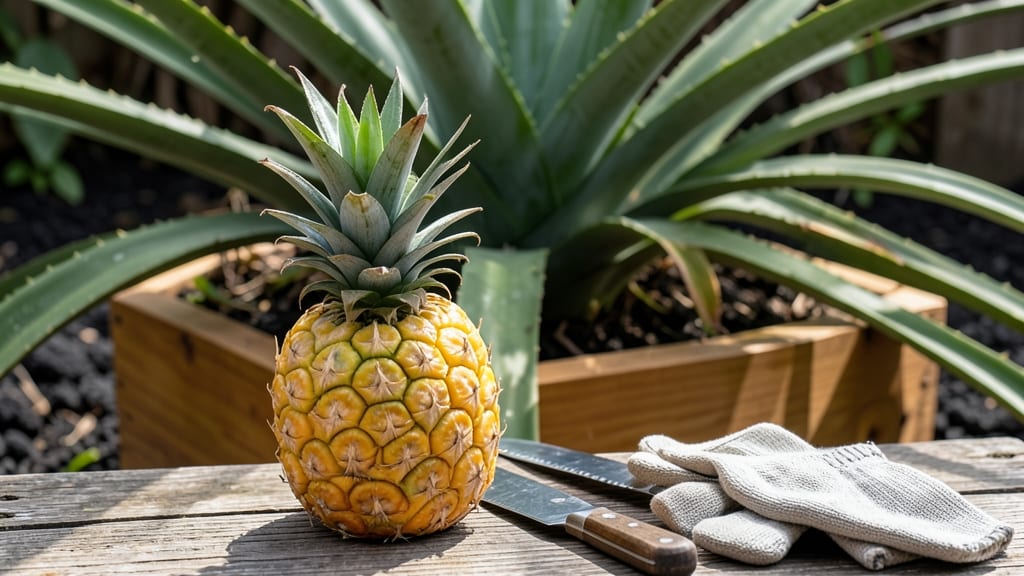
How to know when to pick a pineapple can turn a frustrating guess into a sweet victory—yet most gardeners miss the perfect moment. That golden base and fragrant aroma aren’t just luck; they’re science-backed signals your pineapple is ready to harvest, especially if you’re growing it in containers or warm climates like zones 10-12.
I’ve learned the hard way that waiting for the leaves to brown isn’t enough—you need to check the fruit’s weight, skin firmness, and even its scent before cutting.
These three tactile tests will help you avoid the pitfalls of underripe tartness or overripe mushiness, whether your pineapple has been growing for 18-24 months or you’re impatient for that first harvest.
What if I told you one simple press could save you from disappointment? The secret lies in how the fruit feels near its base and the subtle shift in color from green to yellow.
Let’s break down exactly what to look for so you can confidently pick your pineapple at its peak—no more second-guessing, just perfect ripeness every time.
From tropical gardens to urban containers, these methods work year-round in frost-free zones. Whether you’re a seasoned grower or trying pineapples for the first time, mastering these cues will ensure your effort pays off with a sweet, juicy reward instead of a bland letdown.
3 Tactile tests to determine pineapple ripeness without cutting
When growing your own pineapple, the art of harvesting relies heavily on tactile cues rather than visual ones alone. Unlike store-bought pineapples, homegrown fruit doesn’t come with artificial ripening tricks—so your fingers and nose become your best tools.
These three tactile tests will help you pinpoint ripeness with near-perfect accuracy, ensuring you never pick too early or too late.
First, focus on the base of the fruit. A ripe pineapple’s base should feel slightly soft when pressed gently with your thumb. Think of it like testing a ripe avocado—just enough give to indicate maturity without being mushy.
This softness is your first clue that the fruit’s sugars have fully developed. If it feels rock-hard, it’s still green inside, while excessive softness signals overripeness.
Next, examine the leaves at the crown. As the pineapple matures, the outer leaves will begin to yellow and dry, eventually falling off naturally. This process, called senescence, is nature’s way of telling you it’s time to harvest.
Count 2-3 brown, crispy leaves at the base as your green light—this usually means the fruit is ready within 24-48 hours.
Finally, trust your sense of smell. A ripe pineapple emits a sweet, tropical aroma near its base, almost like a mix of honey and pineapple. If you can’t detect this scent, the fruit likely needs more time.
Pro tip: Sniff near the stem end—this is where the most concentrated aroma develops. A faint or non-existent smell means it’s not ready yet.
For container-grown pineapples, these tests are even more critical since root-bound stress can accelerate ripening. If your plant is in a small pot, it may ripen faster—so monitor the tactile cues weekly during the final stages. Remember, pineapples don’t ripen further after picking, so timing is everything.
One common mistake is over-relying on color. While a golden-yellow base is ideal, some varieties (like 'Sugarloaf') may stay partially green even when ripe. That’s why the combination of touch, smell, and leaf condition is non-negotiable.
For example, a pineapple with a yellow base but no scent is likely underripe, while one with a strong aroma but firm leaves may still need a few days.
If you’re growing pineapples in cooler climates (Zones 8-9), these tactile tests become even more important because temperature fluctuations can slow ripening. In these cases, supplement your checks with a growth stage tracker—most pineapples take 18-24 months to mature, so patience is key.
Once you’ve confirmed ripeness using all three tests, harvest within 24 hours to preserve sweetness.
Pro growers swear by morning harvesting because the fruit’s sugars are most concentrated after a night’s rest. Use a sharp, sterilized knife to cut the pineapple 1-2 inches below the base, leaving the crown intact if you want to propagate new plants.
Store your freshly picked pineapple at room temperature for 2-3 days to let its flavors peak before refrigerating.
Now that you’ve mastered the tactile approach, you’ll never second-guess ripeness again. The next step? Learning how to enhance sweetness through post-harvest care—but that’s a topic for another guide. For now, trust your hands, your nose, and your patience.
How to pick a pineapple based on color, weight, and base characteristics
When growing pineapples at home, visual and physical cues often reveal ripeness better than guesswork. The base color shifts from green to golden-yellow, while the fruit weight becomes noticeably heavier for its size. These changes signal the fruit's internal sugars have peaked—critical for that perfect sweetness.
Start by examining the base of the pineapple. A ripe fruit will show a golden-yellow hue where the stem meets the fruit, rather than a green or white base. This color change indicates the fruit's natural sugars have fully developed, ensuring maximum flavor.
Next, lift the pineapple gently. A ripe fruit feels heavy for its size—almost too heavy to hold comfortably. This weight comes from the concentrated sugars and moisture inside. If it feels light, it’s likely underripe.
Check the leaves at the base. When the pineapple is ready, these leaves will begin to turn brown and dry out, eventually falling off naturally. This is your plant’s way of signaling it’s time to harvest.
| Characteristic | Ripe Pineapple | Underripe Pineapple |
|---|---|---|
| Base Color | Golden-yellow | Green or white |
| Fruit Weight | Heavy for size | Light for size |
| Base Leaves | Brown & drying | Green & firm |
| Skin Texture | Slightly soft near base | Hard & tight |
Don’t overlook the skin texture. Near the base, a ripe pineapple will feel slightly soft when pressed gently with your thumb. If it dents easily, it’s overripe. Meanwhile, an underripe fruit will feel hard and unyielding everywhere.
Finally, sniff the base. A ripe pineapple emits a sweet, tropical aroma—like a mix of honey and citrus. If there’s no scent, the fruit isn’t ready. Trust your nose; it’s the most reliable indicator after visual cues.
By combining these color, weight, and scent checks, you’ll never second-guess whether your homegrown pineapple is ready to harvest. The key is patience—wait until all signs align for that perfect balance of sweetness and texture.